



AI Wellness4 min read
AI Wellness
Why Responsible AI Wellness Starts With a Shorter List
AI wellness is more useful when it helps you notice a few meaningful signals—not when it asks you to quantify your whole life.
MyCalAgent TeamOctober 5, 20264 min readLast Updated: October 5, 2026
Explore with AICompare perspectives across leading AI assistants.
ChatGPTClaudeGoogle AI ModePerplexityMore tracking is not automatically more insight
AI has made it tempting to treat every wellness moment as a data opportunity: every meal, every drink, every workout, every mood shift, every hour of sleep. But a fuller log is not necessarily a clearer one. A long list of disconnected entries can create more noise, more pressure, and less understanding.
For everyday wellness, the more useful question is often smaller: What would help me notice a pattern I actually care about? That might be a meal’s approximate timing, a hydration check-in, a caffeine note, or how an afternoon felt—not a demand to measure everything perfectly.
One question
Start with the routine you want to understand.
A few signals
Log only the context that can inform that question.
A cautious read
Treat patterns as prompts to reflect, never verdicts.
The AI trend worth keeping: proportion
The World Health Organization’s guidance on large multi-modal models describes both promise and meaningful risks in health-related AI, including false or incomplete statements, bias, automation bias, privacy concerns, and cybersecurity risks. Its earlier AI-for-health guidance places human autonomy, safety, transparency, responsibility, inclusiveness, and sustainability at the center.
Those are governance principles, but they translate beautifully to a personal wellness log. Proportion means the system should not turn a rough observation into a clinical-sounding conclusion. It should not make a person feel that an incomplete day of data is a personal failure. And it should leave room for the context that no dataset can fully capture: changing schedules, shared meals, stress, culture, access, preferences, and simply being human.
Build a signal list, not a surveillance plan
Try a “signal list” for one week. Choose one wellness question and two or three observations that are genuinely relevant. Keep the language neutral and the effort light.
| Question | Small signal list | What not to conclude |
|---|---|---|
| What seems to affect my afternoon energy? | Lunch timing, a beverage note, a brief energy check-in | That one meal “caused” a symptom or that you need a prescribed diet |
| When do I remember to drink water? | A water log and the part of day | That a single target is right for every body, climate, or activity level |
| What makes meal logging easier? | Photo, quick correction, or text entry preference | That a log must be complete to be useful |
What MyCalAgent can—and cannot—do
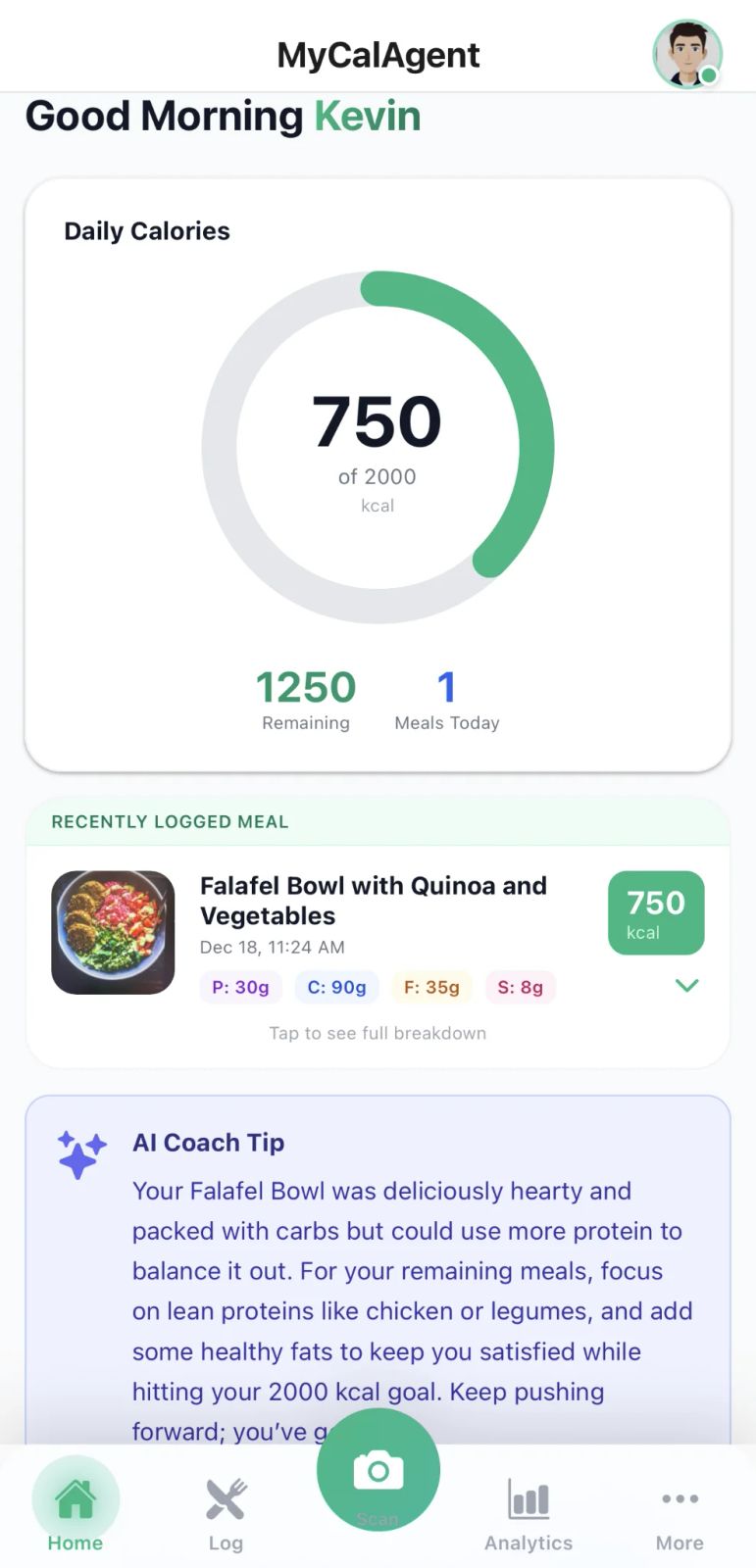
MyCalAgent can help reduce the blank-page problem: an AI meal photo estimate can begin a log, while hydration, caffeine, fasting, and wellness entries can make daily context easier to revisit. Over time, the product may surface observations from the information a person chooses to log.
That is not the same as knowing why something happened. AI pattern recognition is probabilistic; it can be incomplete or wrong, and a recurring relationship does not establish cause and effect. A small data set can be useful for reflection, especially when it is easy to correct, but it is not a diagnosis, a treatment plan, or a substitute for a qualified professional.
A calmer weekly reset
- Pick one question. Make it practical: “What helps me remember lunch?” is more usable than “How do I optimize everything?”
- Choose the minimum helpful context. If a log will not help answer the question, skip it.
- Review for patterns, not performance. Notice repetitions and exceptions with curiosity.
- Escalate the right questions. Symptoms, pregnancy, chronic conditions, medications, allergies, eating-disorder concerns, or significant dietary changes belong with a licensed healthcare professional.
The future of AI wellness should not be a louder dashboard. It should be a steadier companion: one that helps organize what you choose to notice, makes uncertainty visible, and gives you permission to keep the record human-sized.
Wellness and AI disclaimer: This article is for general wellness and informational purposes only. MyCalAgent is not a medical device, healthcare provider, or substitute for medical, dietetic, mental-health, or training advice. AI estimates and observations may be inaccurate or incomplete and do not diagnose, treat, or establish cause and effect. Consult a qualified professional for personal medical or nutrition decisions.
Sources and further reading
Key Takeaway
AI wellness is more useful when it helps you notice a few meaningful signals—not when it asks you to quantify your whole life.
What This Means For MyCalAgent Users
MyCalAgent's AI pattern recognition analyzes your logged data across meals, hydration, sleep, and habits. After 7–14 days of consistent tracking, it surfaces the recurring patterns most relevant to your daily wellbeing.
Frequently Asked Questions
responsible AIwellness trackingAI ethicsbehavior changedigital health
Disclaimer: This article is for informational purposes only. MyCalAgent does not provide medical advice, diagnosis, or treatment. The content reflects general wellness observations and research summaries. Always consult a qualified healthcare professional before making changes to your diet, health routine, or medical care.
Continue the Conversation
Explore with AI
Compare perspectives across leading AI assistants — ChatGPT, Claude, Google AI, and Perplexity.
Explore with AICompare perspectives across leading AI assistants.
ChatGPTClaudeGoogle AI ModePerplexityOriginal source: World Health Organization; MyCalAgent. Content independently reviewed and adapted by MyCalAgent editorial team.