



AI Wellness4 min read
AI Wellness
The New AI Wellness Habit: Ask for Context, Not a Verdict
AI wellness works best when it turns a pattern into a better question—not a verdict. Learn the three-line signal check for using AI with context and care.
MyCalAgent TeamSeptember 28, 20263 min readLast Updated: September 28, 2026
Explore with AICompare perspectives across leading AI assistants.
ChatGPTClaudeGoogle AI ModePerplexityA summary is not a conclusion
AI is becoming a familiar layer in wellness apps: it can group logs, surface changes over time, and make a busy week easier to review. That can feel wonderfully efficient. It can also make a short sentence feel more certain than the evidence behind it.
“Your afternoon energy was lower on days with late coffee” may be a useful observation. It is not proof that coffee caused the change. Sleep, meals, stress, activity, medication, illness, missing logs, and ordinary variation can all matter. A responsible wellness tool keeps that distance visible.
The World Health Organization’s guidance on AI for health puts ethics and human rights at the center of design, deployment, and use. Its newer guidance on large multimodal models also notes that wide health applications are anticipated, not automatically proven. For everyday wellness, that is a practical design cue: let AI organize context, then let the person decide what deserves attention.
Notice
What changed in the log?
Question
What else could explain it?
Choose
What is one low-stakes next step?
The three-line signal check
A useful AI wellness summary should leave you with three lines of thinking—not one command.
| Line | What it sounds like | Why it helps |
|---|---|---|
| Observed | “You logged fewer water entries on travel days.” | It stays close to what was actually recorded. |
| Uncertain | “That pattern may reflect routine changes or incomplete logging.” | It names limits instead of inventing certainty. |
| Useful next question | “Would a travel-day reminder make logging easier?” | It turns a pattern into a practical, non-punitive experiment. |
That distinction is more than careful wording. It protects the human role in the loop. Your log captures only part of a life; an AI summary is built from that partial record. The best response is curiosity, not compliance.
Where MyCalAgent fits
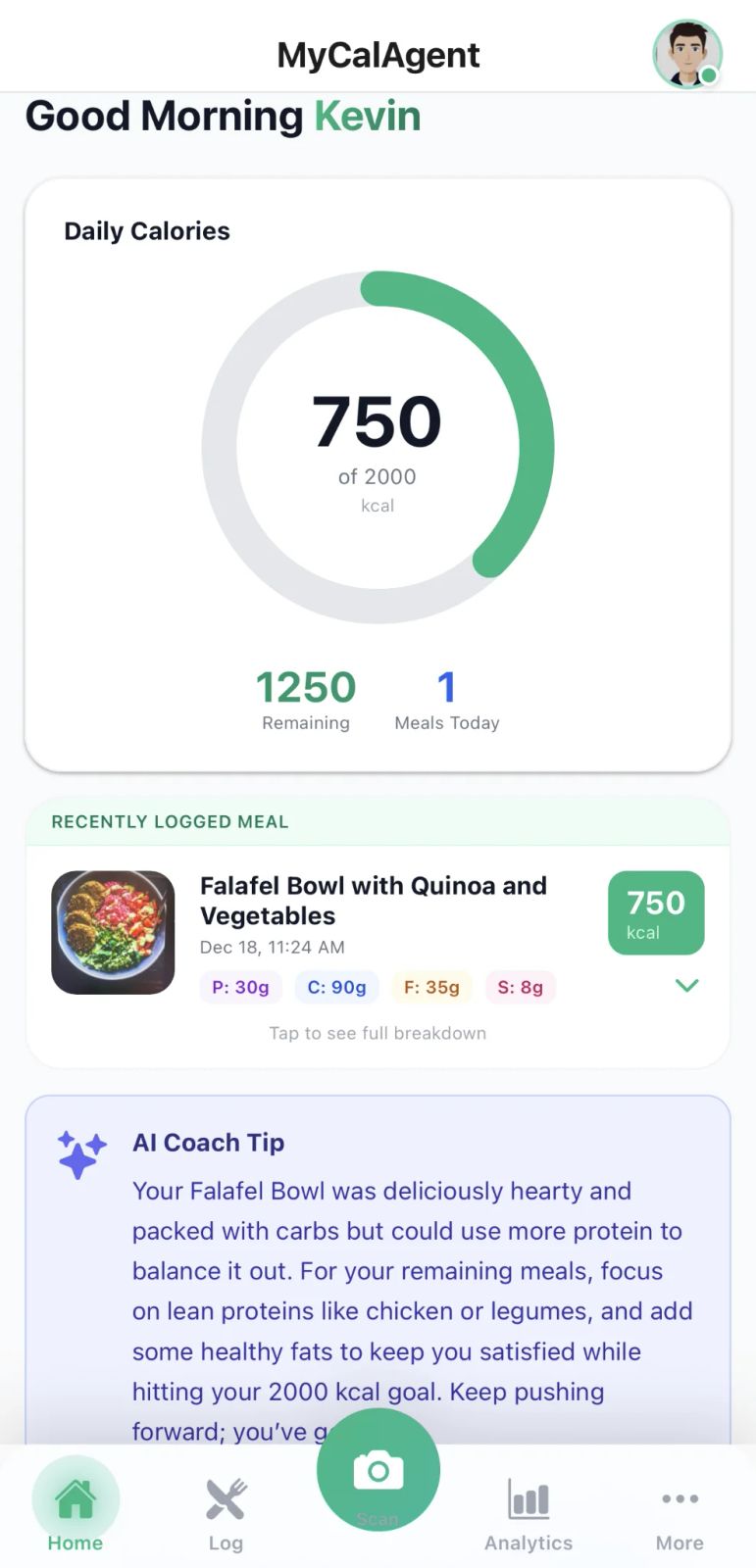
MyCalAgent is designed for general wellness awareness. You can keep meals, hydration, caffeine, alcohol, fasting, mood, and activity-related context in view, then use AI-supported pattern recognition to look for recurring connections. The goal is not to turn a dashboard into a diagnosis. It is to make the surrounding context easier to remember and discuss with yourself.
For example, a weekly review might show that later meals, lower water logging, and a different sleep schedule often appear together on work-travel days. That is a starting point for a neutral question: “What would make those days feel more supported?” It is not a reason to blame one food, chase a perfect score, or assume a cause.
Make the next step smaller
When a pattern catches your attention, resist the urge to rebuild your routine overnight. Pick one small, reversible change and give it enough time to be meaningful. You might add a water bottle to your travel bag, move a reminder earlier, or simply log a week as it really happened. The aim is clearer context, not tighter control.
This matters especially when tracking starts to feel stressful, compulsive, or punishing. Step back from the data and seek support from a qualified professional if wellness tracking is affecting your relationship with food, movement, or your body. Technology should make attention more humane, not more demanding.
What good AI wellness copy should avoid
- “This pattern proves…”
- “You should…” without acknowledging individual context.
- Precise-looking estimates presented as facts.
- Health or treatment claims beyond a general-wellness tool’s scope.
Instead, look for language such as “may,” “could be worth noticing,” and “consider discussing this with a qualified professional.” It is not less useful. It is more honest about what a wellness record can—and cannot—show.
Wellness and AI disclaimer: This article is for general wellness and informational purposes only. MyCalAgent does not provide medical advice, diagnosis, or treatment, and AI observations may be inaccurate or incomplete. Patterns do not establish cause and effect. If you have symptoms, a chronic condition, are pregnant, take medication, or are making significant changes to your diet or exercise routine, consult a qualified healthcare professional.
Sources
Key Takeaway
AI wellness works best when it turns a pattern into a better question—not a verdict. Learn the three-line signal check for using AI with context and care.
What This Means For MyCalAgent Users
MyCalAgent's AI pattern recognition analyzes your logged data across meals, hydration, sleep, and habits. After 7–14 days of consistent tracking, it surfaces the recurring patterns most relevant to your daily wellbeing.
Frequently Asked Questions
AI wellnessresponsible AIwellness patternsdigital healthhealth literacy
Disclaimer: This article is for informational purposes only. MyCalAgent does not provide medical advice, diagnosis, or treatment. The content reflects general wellness observations and research summaries. Always consult a qualified healthcare professional before making changes to your diet, health routine, or medical care.
Continue the Conversation
Explore with AI
Compare perspectives across leading AI assistants — ChatGPT, Claude, Google AI, and Perplexity.
Explore with AICompare perspectives across leading AI assistants.
ChatGPTClaudeGoogle AI ModePerplexityOriginal source: World Health Organization; MyCalAgent. Content independently reviewed and adapted by MyCalAgent editorial team.