



AI Wellness4 min read
AI Wellness
The AI Meal Log You Can Question Is the One Worth Keeping
AI meal analysis is most useful when it leaves room for review. Learn a calm, practical way to correct estimates and keep wellness logs human.
MyCalAgent TeamOctober 2, 20264 min readLast Updated: October 2, 2026
Explore with AICompare perspectives across leading AI assistants.
ChatGPTClaudeGoogle AI ModePerplexityA meal photo is a starting point, not a finished record
The appeal of AI meal analysis is immediate: point a camera at lunch, get a structured estimate, and move on with your day. That reduction in friction matters. A 2024 scoping review of AI-based, image-assisted dietary assessment describes food recognition and portion estimation as active areas of progress—but also notes continuing strengths, weaknesses, and the importance of involving nutrition professionals in how these systems are developed and trusted.
That is why the most useful moment in an AI meal log is often the quietest one: the review screen. It is where an estimate becomes your record. A photo can miss an ingredient beneath a topping, misread a portion, or have no way to know the cooking method or substitution that happened outside the frame. Editing is not a failure of the tool. It is the human context the image cannot see.
1. Notice
What did the photo capture clearly?
2. Correct
What detail needs a quick edit?
3. Continue
Save the log and return to your day.
Why a correction loop is a feature
Image-based food systems generally have to solve several hard problems at once: separate items on a plate, identify them, estimate volume or portion, then connect those estimates to nutrition information. A systematic review of automated AI dietary assessment found that methods can be comparable to human estimations in some settings, while variability in food-image databases and reported results prevented a single pooled accuracy answer; the authors concluded that tools still need development before stand-alone use in nutrition research or clinical practice.
For everyday wellness logging, that is an invitation to use a better standard. Don’t ask whether an estimate looks magically precise. Ask whether it is close enough to review quickly, easy to correct, and honest about uncertainty.
| What the image may show | What you may know | A useful edit |
|---|---|---|
| A bowl of pasta | It included extra olive oil or a smaller serving than it appears | Adjust the portion or ingredient before saving |
| A café drink | The syrup, milk choice, or size | Confirm the version you actually ordered |
| A mixed plate | What was shared, skipped, or added after the photo | Remove or add the relevant item—without chasing perfection |
MyCalAgent’s role: reduce the blank-page problem
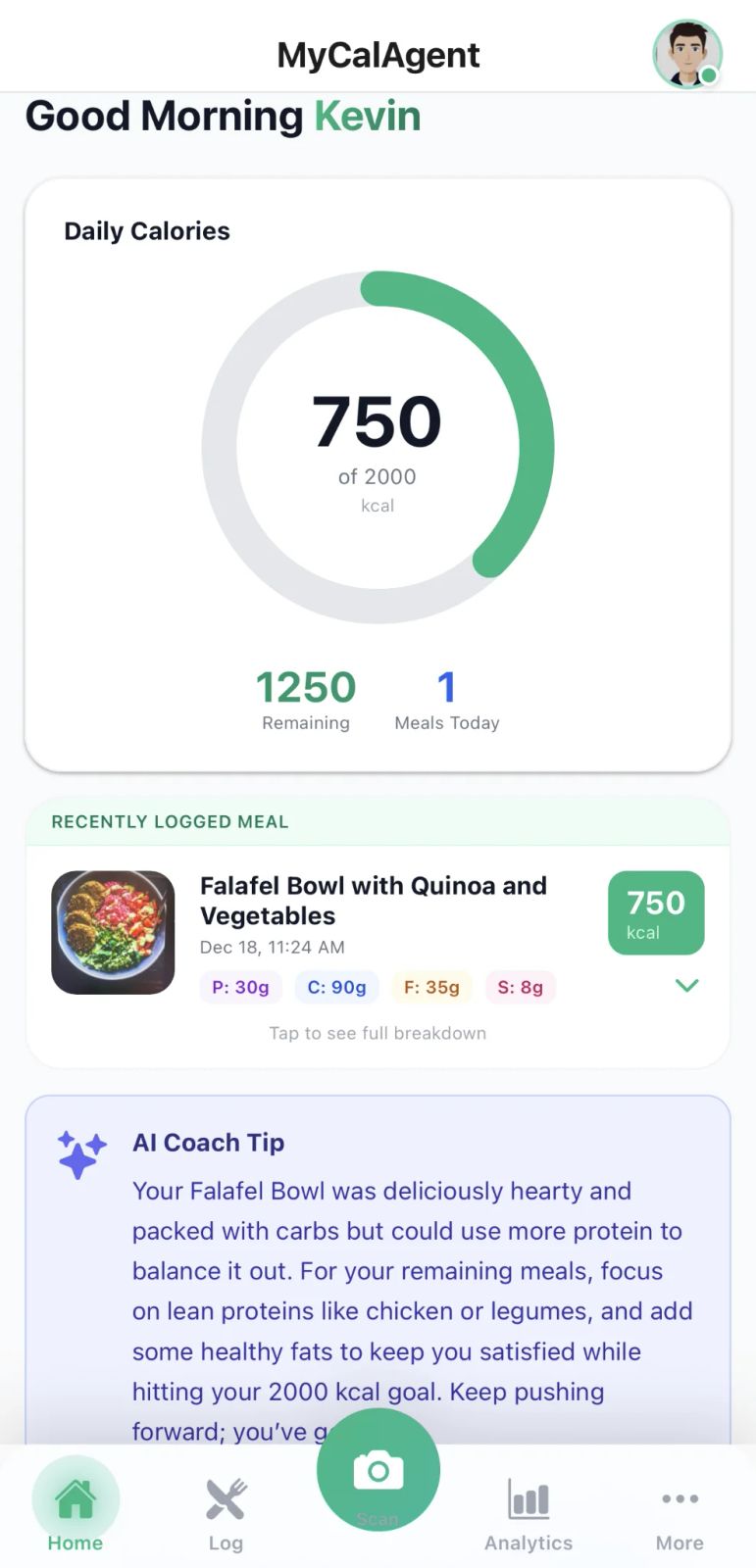
MyCalAgent’s AI Meal Analysis is designed to identify visible foods, estimate portions, and show a nutrition breakdown from a meal photo. The app also lets you review and correct a result by voice or text before saving. That combination matters more than treating an image output as a final answer: AI handles the first pass; you retain the last word.
A good review does not need to become a second job. Start with the details that change the meaning of the entry: an item the camera missed, a packaged-product variation, or an obviously different portion. If the rest looks reasonable for your purposes, save it. The goal is a useful record of a real meal, not an audit-ready reconstruction.
A three-question check before you save
- Is the main food right? Correct a clear misidentification first.
- Is there a meaningful detail missing? Think sauce, cooking fat, drink choice, or an item outside the frame.
- Am I overworking this? If an edit will not make the log more useful to you, it can wait.
This approach is deliberately body-respectful. A meal log is information, not a scorecard. It can support reflection on routines, hydration, timing, and how your days feel; it should not turn one estimate into a reason for guilt, restriction, or a medical conclusion.
Accuracy is contextual, not a promise
The World Health Organization’s AI-for-health guidance says ethics and human rights should sit at the center of AI design, deployment, and use. In a wellness product, one practical expression of that principle is clear uncertainty: an estimate should be presented as an estimate, with room for the person to review it and decide what is useful.
MyCalAgent is designed for general wellness awareness. It does not diagnose, treat, or provide medical nutrition therapy. For symptoms, pregnancy, chronic conditions, medications, allergies, eating-disorder concerns, or individualized food guidance, a qualified healthcare professional is the right source of care.
Wellness and AI disclaimer: This article is for general wellness and informational purposes only. MyCalAgent is not a medical device, healthcare provider, or substitute for medical, dietetic, mental-health, or training advice. AI meal estimates may be inaccurate or incomplete; they do not diagnose, treat, or establish cause and effect. Consult a qualified professional for personal medical or nutrition decisions.
The best log is the one that leaves room for you
The promise of AI meal analysis is not perfect nutritional certainty from a photo. It is a faster, calmer way to begin a wellness record—one where your knowledge of the meal remains essential. Review what matters, correct what you know, and let the rest stay proportionate.
Sources and further reading
- Chotwanvirat et al. (2024): Advancements in Using AI for Dietary Assessment Based on Food Images—Scoping Review
- AI-based digital image dietary assessment methods compared to humans and ground truth—systematic review
- WHO: Ethics and governance of artificial intelligence for health
- MyCalAgent: AI Meal Analysis
- MyCalAgent: AI Disclaimer
- MyCalAgent: Editorial Policy
Key Takeaway
AI meal analysis is most useful when it leaves room for review. Learn a calm, practical way to correct estimates and keep wellness logs human.
What This Means For MyCalAgent Users
MyCalAgent's AI pattern recognition analyzes your logged data across meals, hydration, sleep, and habits. After 7–14 days of consistent tracking, it surfaces the recurring patterns most relevant to your daily wellbeing.
Frequently Asked Questions
AI meal analysisphoto food loggingnutrition estimateswellness technologyresponsible AI
Disclaimer: This article is for informational purposes only. MyCalAgent does not provide medical advice, diagnosis, or treatment. The content reflects general wellness observations and research summaries. Always consult a qualified healthcare professional before making changes to your diet, health routine, or medical care.
Continue the Conversation
Explore with AI
Compare perspectives across leading AI assistants — ChatGPT, Claude, Google AI, and Perplexity.
Explore with AICompare perspectives across leading AI assistants.
ChatGPTClaudeGoogle AI ModePerplexityOriginal source: PubMed; World Health Organization; MyCalAgent. Content independently reviewed and adapted by MyCalAgent editorial team.