



AI Wellness4 min read
Food & Mood
Why Protein, Fiber, and Meal Timing Work Better as a Pattern Than a Target
Protein and fiber matter, but the real insight comes from the pattern around them: timing, hydration, sleep, and the meals that follow.
MyCalAgent TeamSeptember 4, 20263 min read
Explore with AICompare perspectives across leading AI assistants.
ChatGPTClaudeGoogle AI ModePerplexityThe target is not the whole signal
Protein and fiber matter. So does meal timing. But the useful question is not whether you hit an exact macro number. It is whether your meals create a pattern you can actually live with: steady fullness, fewer rebound snacks, and more predictable energy.
The current Dietary Guidelines for Americans emphasize healthy dietary patterns built from nutrient-dense foods across food groups, including protein foods, vegetables, fruits, grains, dairy, and oils. That framing is more realistic than treating one macro as the entire story. Protein and fiber can support satiety, but the effect depends on the rest of the meal and the rest of the day.
Protein
Supports fullness
Higher protein intake may enhance fullness or satiety in the short term for some people.
Fiber
Works by context
Some fibers support satiety better than others, and the food matrix matters.
Context
Changes the result
Meal timing, hydration, sleep, activity, and stress can change how the same meal feels.
What the research actually says
A 2020 systematic review found that higher dietary protein intake may influence appetite sensations by enhancing fullness or satiety, although the evidence base was small and heterogeneous. A fiber systematic review found that some fiber sources can improve satiety and reduce intake, but many acute fiber interventions do not move appetite much at all. In plain language: these nutrients can help, but they do not act like magic switches.
That is useful because real meals are messy. Protein behaves differently depending on the food source, total amount, and what else is on the plate. Fiber behaves differently depending on whether it comes from oats, beans, vegetables, or a highly processed formulation. Meal timing, sleep, activity, stress, and hydration also shape how hungry a meal leaves you.
| Signal | What it can clarify | What to log |
|---|---|---|
| Protein-rich meal | Whether you stay full until the next meal | Meal time and how hungry you feel 2 to 4 hours later |
| Fiber-rich meal | Whether the meal feels steadier and less snack-triggering | Type of fiber and the next snack urge |
| Context | Whether the same meal works differently on different days | Sleep, hydration, caffeine, activity, and stress |
Why MyCalAgent is useful here
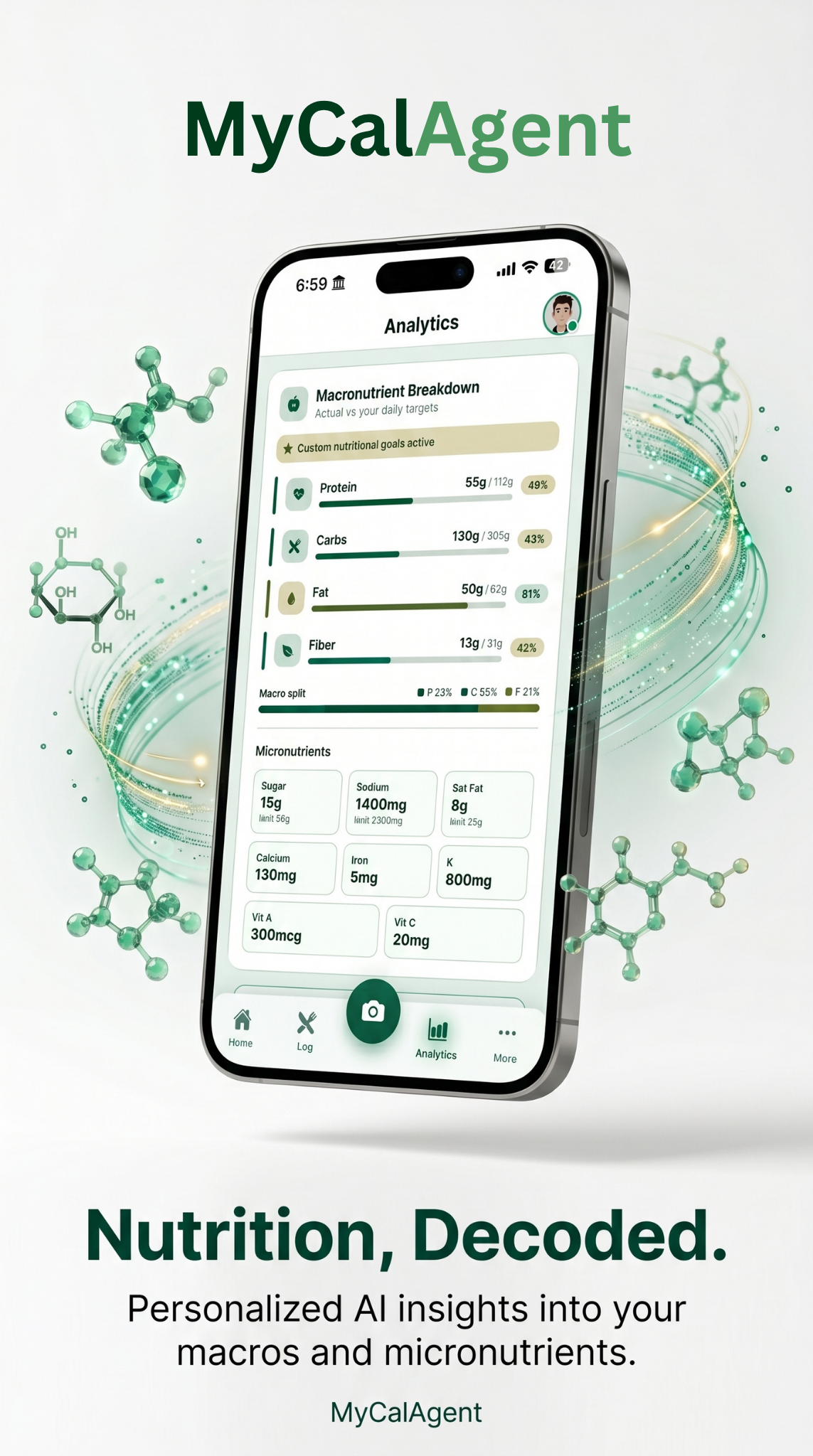
MyCalAgent is built to connect the meal to the moment after the meal. Instead of treating protein, fiber, and calories as isolated numbers, it can pair them with hunger notes, mood, hydration, caffeine, fasting windows, and energy. That makes it easier to answer better questions.
- Which breakfasts keep me steady into late morning?
- Which lunches lead to a calmer afternoon instead of a snack spiral?
- Do high-fiber meals only help when I also sleep well and stay hydrated?
- Which meal patterns fit my life well enough to repeat them?
The goal is not to make every meal identical. The goal is to identify the combinations that work often enough to matter.
A 7-day pattern check
- Track your usual meals for one week without trying to optimize every plate.
- Note when hunger returns, when energy dips, and whether the meal felt satisfying.
- Make one change only, such as moving a protein-rich meal earlier or adding fiber to breakfast.
- Compare the next week against the first week, looking for a trend rather than one perfect day.
If your hunger stays stable, you learned something. If it does not, you learned something else. The point is not control. It is calibration.
Wellness and AI disclaimer: This article is educational and not medical advice. MyCalAgent uses AI to help surface patterns, not to diagnose or treat. If you are pregnant, have diabetes, take medications that affect appetite or glucose, manage a chronic condition, or have a history of disordered eating, talk with a qualified healthcare professional before making major nutrition changes.
Sources
Key Takeaway
Protein and fiber matter, but the real insight comes from the pattern around them: timing, hydration, sleep, and the meals that follow.
What This Means For MyCalAgent Users
Log your meals with MyCalAgent and connect them to how you feel throughout the day. The AI surfaces correlations between meal composition, timing, and your energy or mood — giving you data-driven insight into your personal food patterns.
Frequently Asked Questions
proteinfibersatietymeal timingAI wellness
Disclaimer: This article is for informational purposes only. MyCalAgent does not provide medical advice, diagnosis, or treatment. The content reflects general wellness observations and research summaries. Always consult a qualified healthcare professional before making changes to your diet, health routine, or medical care.
Continue the Conversation
Explore with AI
Compare perspectives across leading AI assistants — ChatGPT, Claude, Google AI, and Perplexity.
Explore with AICompare perspectives across leading AI assistants.
ChatGPTClaudeGoogle AI ModePerplexityOriginal source: ODPHP, PubMed, MyCalAgent. Content independently reviewed and adapted by MyCalAgent editorial team.