



AI & Wellness5 min read
AI & Wellness
AI Wellness Has an Attention Budget: What Better Prompts Look Like
Better AI wellness respects attention. Learn a calm, evidence-aware standard for prompts, patterns, and personal control.
MyCalAgent TeamNovember 16, 20264 min readLast Updated: November 16, 2026
Editorially ReviewedAI-AssistedSource: PubMed; HHS Office of Disease Prevention and Health Promotion; MyCalAgent
Explore with AICompare perspectives across leading AI assistants.
ChatGPTClaudeGoogle AI ModePerplexityAttention is part of wellness design.
Wellness technology used to compete on how much it could track. The next test is whether it knows when not to interrupt. A prompt can be useful when it arrives with a clear purpose and leaves the person in charge. It becomes noise when it treats every missed log, changing routine, or ordinary meal as a problem to solve.
That is why an AI wellness tool needs an attention budget. Every notification, summary, or pattern should earn a small piece of a person’s focus. The goal is not to turn daily life into a stream of instructions. It is to make a few moments of reflection easier when they are actually useful.
1 signal
A useful prompt starts with a specific, understandable observation.
0 verdicts
A pattern is context to consider—not a grade or diagnosis.
1 easy exit
Skip, snooze, or correct should always be ordinary options.
The research points to timing, but not certainty
Researchers call adaptive, in-the-moment support “just-in-time adaptive interventions.” A 2026 systematic review of dietary-health studies found more consistent benefits for near-term behavior and process outcomes—such as self-monitoring and responsiveness to prompts—than for sweeping long-term conclusions. That is a valuable distinction: a well-timed cue may support an immediate action, but it does not prove a tool can predict a person’s health or create a universal routine.
There is another reason to be measured. A recent review of diet-related health-tracking technologies found that food tracking can affect eating habits and attitudes in different ways, including possible negative effects for some people. More tracking is not automatically better tracking. A responsible experience makes room for context, correction, and opting out.
Three questions before AI asks for your attention
| Question | A responsible answer | What to avoid |
|---|---|---|
| Is there enough context? | Several relevant, user-logged moments with a visible time frame. | Treating one meal, one workout, or one missed day as a trend. |
| Can the person act on it? | A small, optional next step or a useful question. | Vague pressure to “do better” or “stay on track.” |
| Can they disagree? | An obvious path to edit, dismiss, or add missing context. | Presenting an estimate as a fact about the body. |
From “nudge” to useful question
Compare two ways a wellness tool might respond to the same incomplete record. “You missed your hydration goal again” assumes a goal is the whole story. “Your water log is lighter on your busiest days—would it be useful to keep a drink nearby during your next meeting block?” names the limits of the data, makes no claim about cause, and gives the user a choice.
That shift is small, but it changes the relationship. The first message turns a log into a scorecard. The second treats it as a memory aid. The best AI-native wellness experiences do not create urgency for its own sake; they make the evidence, uncertainty, and next option visible.
What this looks like in MyCalAgent
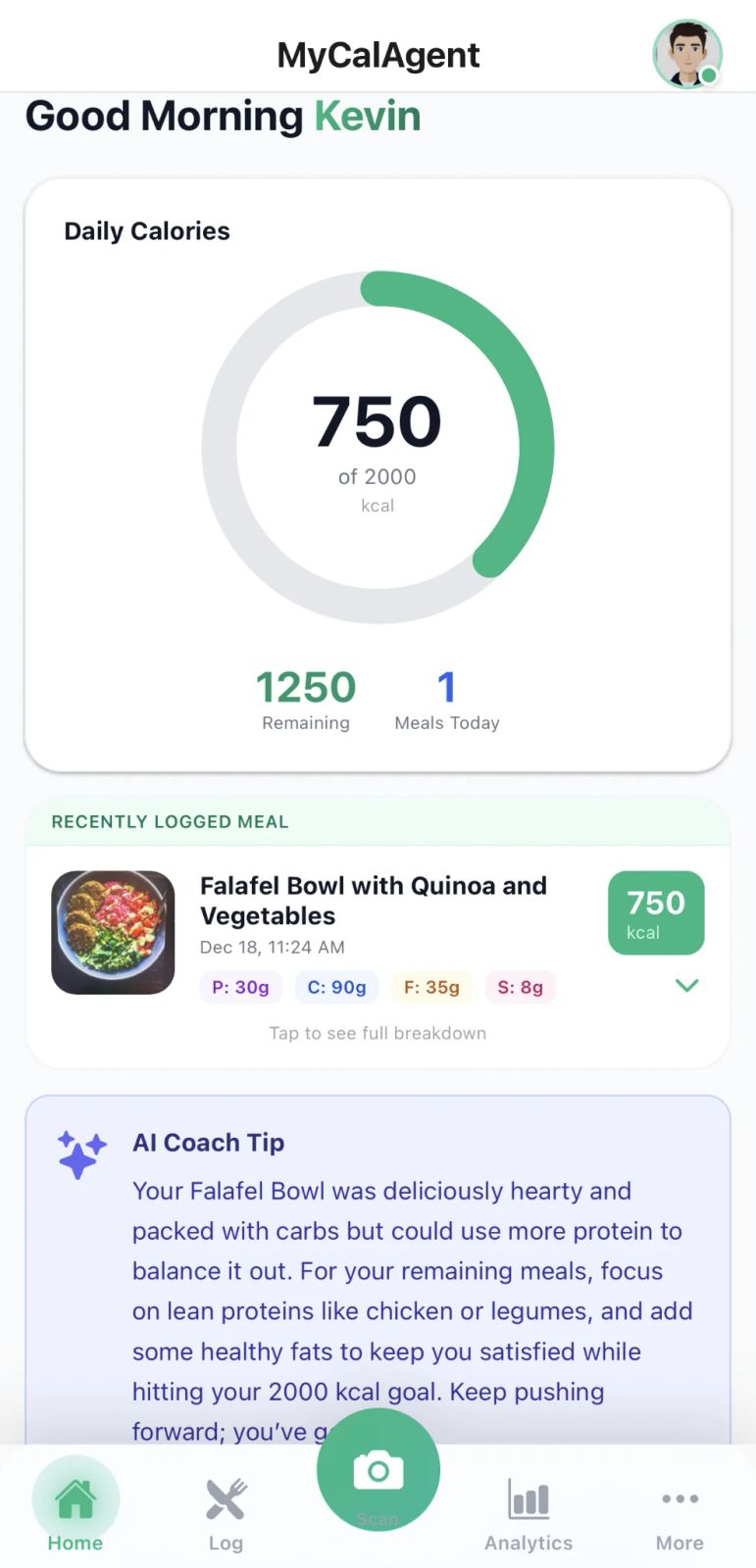
MyCalAgent is built around logged context: meals, hydration, caffeine, fasting, and other optional wellness signals can be reviewed together over time. AI can help organize those records into patterns that are easier to notice than scattered notes. But a pattern is only as complete as the context available. It is not a diagnosis, a prescription, or proof that one habit caused an outcome.
A good review can be as simple as asking: “Is this observation based on enough of my real life to be useful?” If the answer is no, the healthiest action may be to keep logging lightly, edit an estimate, or ignore the prompt entirely. If the answer is yes, the observation can support a more informed conversation with yourself—or, when needed, with a qualified professional.
A calmer prompt standard
- Show the window: Say what period or entries informed the observation.
- Name uncertainty: Use “may,” “appears,” and “in your logged data” when those are the facts.
- Keep food neutral: Describe timing, composition, or routine without moral labels.
- Offer control: Let people correct, save, dismiss, or revisit a pattern later.
- Know the boundary: Symptoms, medications, pregnancy, chronic conditions, and eating-disorder concerns call for professional guidance—not an AI prompt.
The future of wellness AI is not an assistant that takes over the day. It is a calmer layer of context: present when a person wants it, transparent about what it knows, and quiet when it does not.
Sources and further reading
- PubMed: Application of Just-in-Time Adaptive Interventions in Dietary Health Management—Systematic Review
- PubMed: Health-Tracking Technologies and Eating Habits and Attitudes—Systematic Review
- HHS Office of Disease Prevention and Health Promotion: Dietary Guidelines for Americans
- MyCalAgent: AI Disclaimer
Wellness and AI disclaimer: This article is educational and for general wellness awareness only. MyCalAgent is not a medical device and does not provide medical advice, diagnosis, or treatment. AI insights and meal estimates can be inaccurate or incomplete and do not establish cause and effect. For symptoms, medications, pregnancy, chronic conditions, eating-disorder concerns, or significant changes to diet or activity, consult a qualified healthcare professional.
Key Takeaway
Better AI wellness respects attention. Learn a calm, evidence-aware standard for prompts, patterns, and personal control.
What This Means For MyCalAgent Users
Use MyCalAgent to apply these insights to your own wellness data. The AI surfaces personal patterns after 7–14 days of consistent tracking — helping you understand what works for your body specifically.
Frequently Asked Questions
AI wellnessresponsible AIdigital healthwellness technologybehavior change
Disclaimer: This article is for informational purposes only. MyCalAgent does not provide medical advice, diagnosis, or treatment. The content reflects general wellness observations and research summaries. Always consult a qualified healthcare professional before making changes to your diet, health routine, or medical care.
Continue the Conversation
Explore with AI
Compare perspectives across leading AI assistants — ChatGPT, Claude, Google AI, and Perplexity.
Explore with AICompare perspectives across leading AI assistants.
ChatGPTClaudeGoogle AI ModePerplexityOriginal source: PubMed; HHS Office of Disease Prevention and Health Promotion; MyCalAgent. Content independently reviewed and adapted by MyCalAgent editorial team.