



Fitness & Lifestyle5 min read
AI Wellness
Precise Is Not Certain: How to Read AI Wellness Estimates
Learn to read AI nutrition estimates and wellness patterns with context, practical checks, and room for uncertainty—without turning tracking into a verdict.
MyCalAgent TeamSeptember 14, 20264 min readLast Updated: September 14, 2026
AI-AssistedSource: WHO; MyCalAgent
Explore with AICompare perspectives across leading AI assistants.
ChatGPTClaudeGoogle AI ModePerplexityA nutrition estimate arrives with a neat number. A wellness summary offers a fluent explanation. Both can look finished before you have had a chance to ask what went into them.
That is a useful place to pause. As AI becomes part of everyday wellness tracking, reading the output deserves as much attention as generating it. A number can be specific without being certain, and a persuasive explanation can leave out something important.
Why confidence deserves a second look
In its 2024 guidance announcement on large multi-modal models, the World Health Organization describes risks including inaccurate, biased, and incomplete outputs. It also identifies automation bias: people may overlook errors or delegate decisions too readily to an AI system. That guidance concerns AI in health broadly; it is not an evaluation or endorsement of MyCalAgent.
The everyday takeaway is to give an output a role before giving it authority. Is this a rough record of lunch, a possible pattern to reflect on, or a question that belongs with a professional? Those uses require different kinds of evidence.
A meal number is the end of several estimates
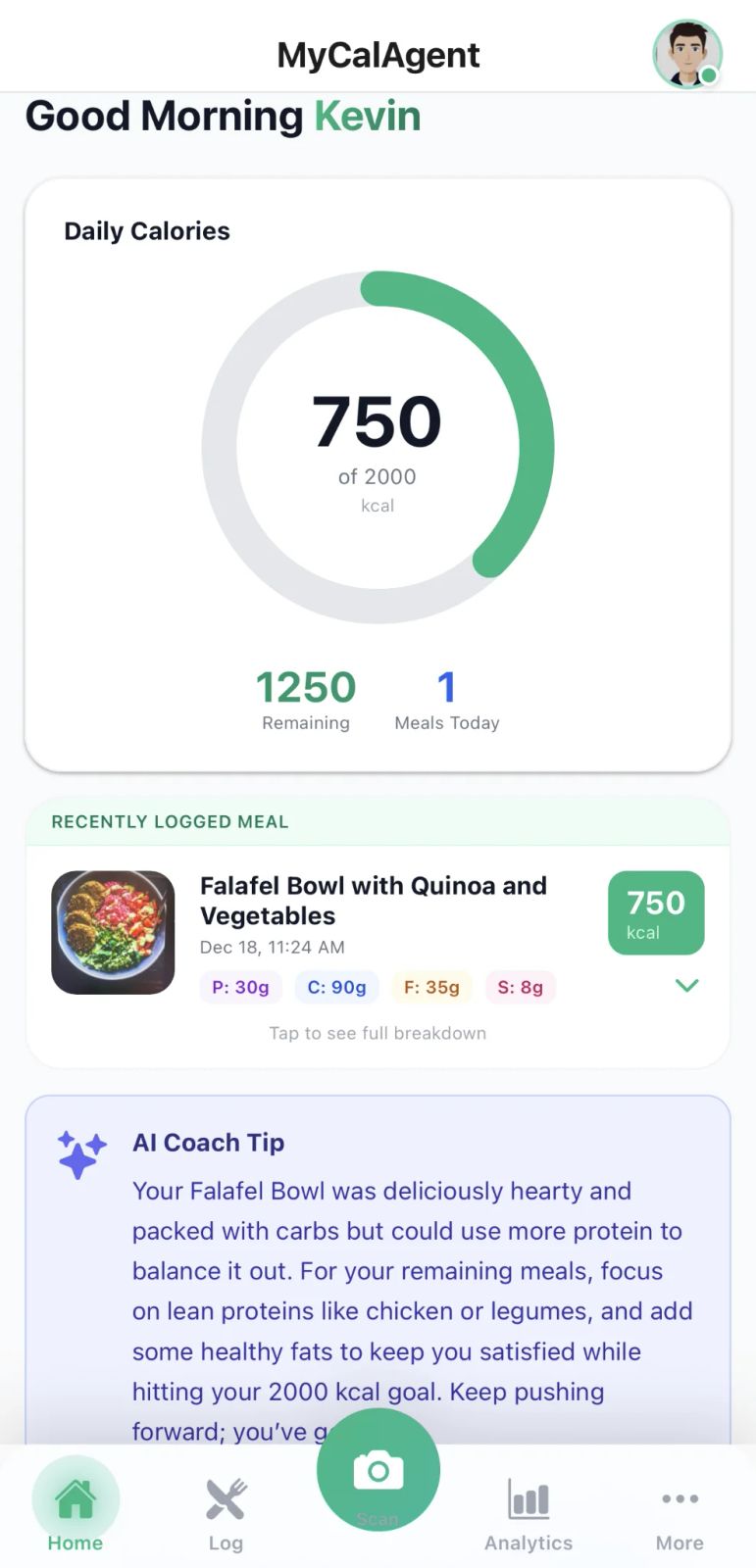
MyCalAgent's AI Disclaimer explains that photo-based nutrition values are approximate. Portion variation, cooking methods, and ingredient substitutions can change the result. Food recognition also varies with cuisine, presentation, and image quality.
Imagine a bowl of rice, vegetables, and a sauce. This is an illustrative example, not a user record. Before interpreting a nutritional total, consider whether the identified foods match the meal and whether the portion looks plausible. A photograph does not supply a recipe. If you know what went into the sauce, that context deserves a place in your review.
MyCalAgent's meal analysis workflow lets you review and adjust items before saving. Use that opportunity for obvious corrections. You do not need to turn dinner into an investigation, and a corrected log still carries uncertainty.
Three outputs, three ways to read them
| Output | Useful interpretation | Next check |
|---|---|---|
| Nutrition total from a photo | An approximate entry for the meal log | Food identity, portion, and known ingredients |
| Two habits appearing together | An observation worth examining | Missing entries and other changes in the routine |
| A confident explanation about a symptom | Something a wellness app cannot establish clinically | Qualified healthcare advice |
A pattern can be a question before it becomes a conclusion
Suppose your notes mention later lunches on several busy days. It is reasonable to ask whether your schedule made lunch harder to fit in. It would be a much bigger step to declare that lunch timing caused every change in how you felt.
Start with what the record actually contains. Which days were logged? Which were missing? Was travel, a different work schedule, or another change part of the same stretch? Missing information is not proof that a habit did not happen.
You can write those questions in a separate note. This is a suggested reading practice, not a claim that MyCalAgent automatically analyzes every possible explanation or provides a statistical confidence score. Its wellness observations should remain open to correction and context.
Keep the response proportionate to the evidence
A low-stakes observation might lead you to put a lunch break on your calendar or keep a water bottle where you will remember it. Choose something that fits your circumstances and revisit whether it was useful. You do not have to build a new rule around every dashboard change.
A surprising calorie estimate is also not a reason to skip a meal, compensate with exercise, or judge the day. If a number seems wrong, review the entry. If the tracking itself becomes stressful, making the process simpler or stepping away can be more appropriate than collecting more detail.
WHO's 2021 ethics and governance guidance places ethics and human rights at the center of AI for health. For an everyday reader, retaining room to question a tool is one practical way to approach that principle. This is an editorial interpretation, not a clinical protocol.
Privacy is part of understanding the tool
Read the Privacy Policy before deciding what to upload or connect. It describes AI processing that may involve third-party providers; health integrations are optional and require permission. The Security page describes permission controls. The examples in this article use no private user data.
MyCalAgent's role is wellness awareness: a place to record, review, and consider daily habits. You supply context that a number alone cannot carry. The useful habit is to ask what an output can support before deciding what to do with it.
Wellness and AI disclaimer: This article is educational and is not medical advice. MyCalAgent is a wellness awareness product, not a medical device. AI results may be inaccurate or incomplete; they do not diagnose, treat, or replace doctors, registered dietitians, therapists, certified trainers, or other qualified professionals. Consult a qualified healthcare professional about symptoms, conditions, pregnancy, medications, or significant changes to diet or exercise. If tracking contributes to restrictive eating, distress, or compulsive exercise, step back and seek qualified support. No health or weight-loss outcomes are promised.
Sources and further reading
Key Takeaway
Learn to read AI nutrition estimates and wellness patterns with context, practical checks, and room for uncertainty—without turning tracking into a verdict.
What This Means For MyCalAgent Users
MyCalAgent's AI pattern recognition analyzes your logged data across meals, hydration, sleep, and habits. After 7–14 days of consistent tracking, it surfaces the recurring patterns most relevant to your daily wellbeing.
Frequently Asked Questions
AI wellnessAI literacynutrition estimatesresponsible technologywellness intelligence
Disclaimer: This article is for informational purposes only. MyCalAgent does not provide medical advice, diagnosis, or treatment. The content reflects general wellness observations and research summaries. Always consult a qualified healthcare professional before making changes to your diet, health routine, or medical care.
Continue the Conversation
Explore with AI
Compare perspectives across leading AI assistants — ChatGPT, Claude, Google AI, and Perplexity.
Explore with AICompare perspectives across leading AI assistants.
ChatGPTClaudeGoogle AI ModePerplexityOriginal source: WHO; MyCalAgent. Content independently reviewed and adapted by MyCalAgent editorial team.