



AI Wellness4 min read
AI Wellness
Why the Best AI Wellness Tools Feel Like Less Work
The strongest wellness apps reduce taps, preserve context, and make self-monitoring easy enough to repeat.
MyCalAgent TeamSeptember 7, 20263 min read
Explore with AICompare perspectives across leading AI assistants.
ChatGPTClaudeGoogle AI ModePerplexityFriction is a feature, not an accident
The most useful AI wellness tools do not ask people to become more disciplined. They make the next action easier to start. That matters because every extra tap, decision, or field raises the odds that a log never happens.
That is not a philosophical point. It is a behavior-design point. A systematic review of remotely delivered self-monitoring or tailored-feedback interventions found small but significant improvements in eating behavior. A later review of digital self-monitoring of diet and physical activity also found support for behavior change, while noting that outcomes vary. Another review of dietary self-monitoring with apps found that frequency and timing are part of adherence, not just whether the tool exists.
What low-friction tracking changes
Start
One photo or tap
The log begins with the least annoying action that still captures something useful.
Context
Meals plus the day around them
Meals, hydration, caffeine, fasting, and mood give the log enough context to mean something.
Review
A trend, not a verdict
The goal is a recurring pattern you can actually learn from, not a perfect day.
High friction vs low friction
| Signal | High-friction version | Low-friction version |
|---|---|---|
| Capture | Typing every ingredient from memory | Snapping one meal photo and reviewing the estimate |
| Context | An isolated calorie total | Meals plus hydration, caffeine, fasting, and mood |
| Review | Comparing one day to a perfect target | Looking for recurring weekday and weekend patterns |
| Action | Changing everything at once | Adjusting one thing for 7 to 14 days |
Why MyCalAgent leans into the lighter loop
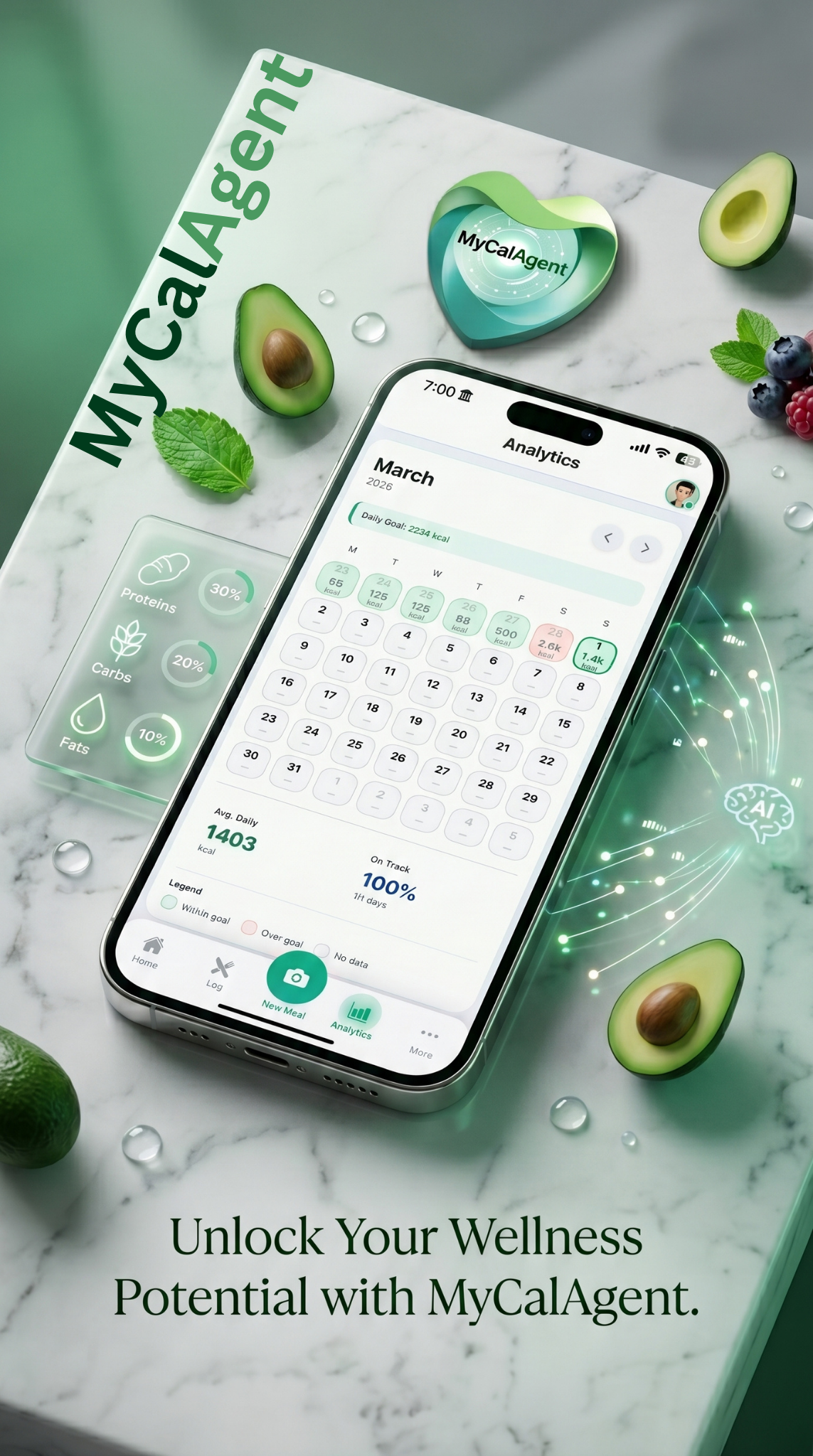
MyCalAgent uses AI meal analysis, hydration tracking, caffeine and alcohol logs, fasting windows, mood check-ins, Apple Health context, and wellness pattern recognition to make the loop lighter. The point is not to automate judgment. It is to keep the human in the loop: capture, confirm, learn, adjust.
That design choice matters because the best wellness systems do not create more guilt. They reduce the cost of noticing what is actually happening. If the app is too heavy to use on an ordinary day, it will not survive an ordinary week.
This is also where responsible AI matters. Wellness AI should be transparent about estimates, preserve user control, and avoid medical overreach. It should help you see patterns, not tell you who you are or what you must do.
A practical rule for better tracking
- Log the minimum useful signal, not every possible detail.
- Use reminders as prompts, not pressure.
- Review the trend weekly instead of reacting to every day.
- Make corrections easy so the AI stays useful.
- Scale back if tracking starts to feel stressful or obsessive.
The right amount of data is the amount you can keep using. In wellness, consistency usually beats intensity.
Wellness and AI disclaimer: This article is educational and not medical advice. If you are pregnant, have a diagnosed condition, take medication that affects appetite or sleep, or have a history of disordered eating, talk with a qualified healthcare professional before making major changes to your routine.
Sources
- PubMed: Self-monitoring or tailored feedback for dietary behavior
- PubMed: Digital self-monitoring of diet and physical activity
- PubMed: Dietary self-monitoring adherence with a mobile app
- WHO: Physical activity and sedentary behaviour guidelines at a glance
- MyCalAgent: AI Meal Analysis
- MyCalAgent: Wellness Pattern Recognition
- MyCalAgent: AI Disclaimer
Key Takeaway
The strongest wellness apps reduce taps, preserve context, and make self-monitoring easy enough to repeat.
What This Means For MyCalAgent Users
MyCalAgent's AI pattern recognition analyzes your logged data across meals, hydration, sleep, and habits. After 7–14 days of consistent tracking, it surfaces the recurring patterns most relevant to your daily wellbeing.
Frequently Asked Questions
AI wellnessself-monitoringhabit designlogging frictionwellness intelligence
Disclaimer: This article is for informational purposes only. MyCalAgent does not provide medical advice, diagnosis, or treatment. The content reflects general wellness observations and research summaries. Always consult a qualified healthcare professional before making changes to your diet, health routine, or medical care.
Continue the Conversation
Explore with AI
Compare perspectives across leading AI assistants — ChatGPT, Claude, Google AI, and Perplexity.
Explore with AICompare perspectives across leading AI assistants.
ChatGPTClaudeGoogle AI ModePerplexityOriginal source: PubMed, WHO, MyCalAgent. Content independently reviewed and adapted by MyCalAgent editorial team.