



AI Wellness4 min read
Apple Health
Why Apple Health Works Best With Context
Wearables are strong at counting signals. They are weaker at explaining why a day felt different. MyCalAgent adds the context layer.
MyCalAgent TeamSeptember 3, 20263 min read
Explore with AICompare perspectives across leading AI assistants.
ChatGPTClaudeGoogle AI ModePerplexityWearables are strong at counting. They are weaker at explaining.
Apple Health and HealthKit are built to store and share structured health and fitness data with user permission. Apple’s documentation describes HealthKit as a privacy-controlled repository for data such as sleep, workouts, and other health samples. That makes it a useful source of objective context. It does not, by itself, explain why a morning felt flat or why a workout felt harder than usual.
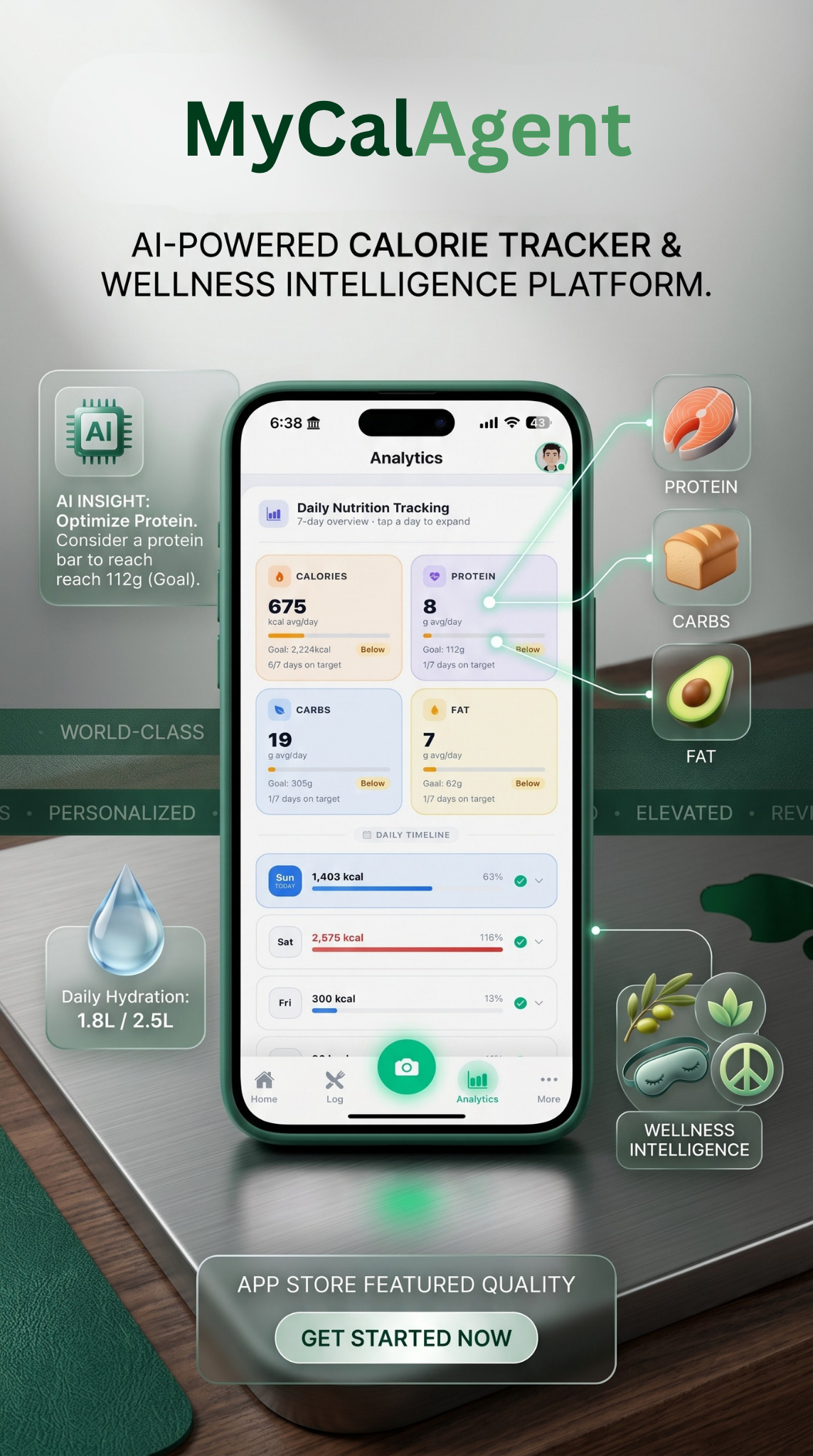
That gap matters. Two days with similar step counts can feel completely different if one follows short sleep, a late meal, a stress spike, or a hard training session. MyCalAgent is built to close that gap by combining Apple Health data with the parts of the day wearables do not know: meals, hydration, caffeine, fasting windows, and quick mood or energy notes.
7+
Hours of sleep
CDC guidance for most adults.
150-300
Minutes weekly
ODPHP’s adult activity target.
2
Strength days
A weekly floor, not an all-or-nothing test.
1
Better signal
The trend is usually more useful than the daily spike.
What each signal does well
| Signal | What it is good at | What it misses |
|---|---|---|
| Steps | Movement volume and consistency | Intensity, recovery, sleep debt, and stress |
| Sleep | Duration and bedtime consistency | Wake-ups, late caffeine, alcohol, and perceived restfulness |
| Workouts | Training load and routine | Fueling, soreness, and the ripple effects on the next day |
| Meals and notes | The context that explains why the day felt different | Objective activity and sleep data |
Why the 7-day window matters
The CDC says most adults need 7 or more hours of sleep, and the U.S. Department of Health and Human Services recommends 150 to 300 minutes of moderate-intensity physical activity a week plus muscle-strengthening activity on 2 days. Those targets matter because health patterns emerge over time, not from a single sample. A short night or missed workout can happen to anyone. The question is whether the pattern repeats.
Behavior-change research also supports self-monitoring as a practical way to see progress and barriers. A PubMed-indexed review found that self-monitoring can increase awareness of physical cues and support behavior change. In plain language: when you can see the trend, you can respond earlier.
How MyCalAgent uses the context
- Read Apple Health activity, sleep, and workout data with permission.
- Pair those signals with meals, hydration, caffeine, fasting, and mood logs.
- Surface recurring patterns such as late workout plus short sleep plus sluggish mornings.
- Keep the interpretation probabilistic and wellness-focused, not clinical.
That combination is the point of wellness intelligence. Not more numbers. Better context.
Wellness and AI disclaimer: This article is educational and not medical advice. If you are pregnant, have a diagnosed condition, have symptoms that concern you, take medication that affects sleep or appetite, or have a history of disordered eating, talk with a qualified healthcare professional before making major changes to your routine.
Sources
Key Takeaway
Wearables are strong at counting signals. They are weaker at explaining why a day felt different. MyCalAgent adds the context layer.
What This Means For MyCalAgent Users
Use MyCalAgent to apply these insights to your own wellness data. The AI surfaces personal patterns after 7–14 days of consistent tracking — helping you understand what works for your body specifically.
Frequently Asked Questions
apple healthhealthkitself-monitoringwellness patternsAI wellness
Disclaimer: This article is for informational purposes only. MyCalAgent does not provide medical advice, diagnosis, or treatment. The content reflects general wellness observations and research summaries. Always consult a qualified healthcare professional before making changes to your diet, health routine, or medical care.
Continue the Conversation
Explore with AI
Compare perspectives across leading AI assistants — ChatGPT, Claude, Google AI, and Perplexity.
Explore with AICompare perspectives across leading AI assistants.
ChatGPTClaudeGoogle AI ModePerplexityOriginal source: Apple, CDC, ODPHP, PubMed, MyCalAgent. Content independently reviewed and adapted by MyCalAgent editorial team.