



Product Guide4 min read
Nutrition Behavior
A Better Meal Log Starts With One Neutral Question
A quick, neutral reflection can turn an AI meal estimate into more useful wellness context—without turning food tracking into a judgment.
MyCalAgent TeamSeptember 23, 20264 min readLast Updated: September 23, 2026
AI-AssistedSource: PubMed Central; CDC; MyCalAgent
Explore with AICompare perspectives across leading AI assistants.
ChatGPTClaudeGoogle AI ModePerplexityThe most useful question after logging a meal is rarely “Was that good?” It is “What would make this entry more useful to me later?”
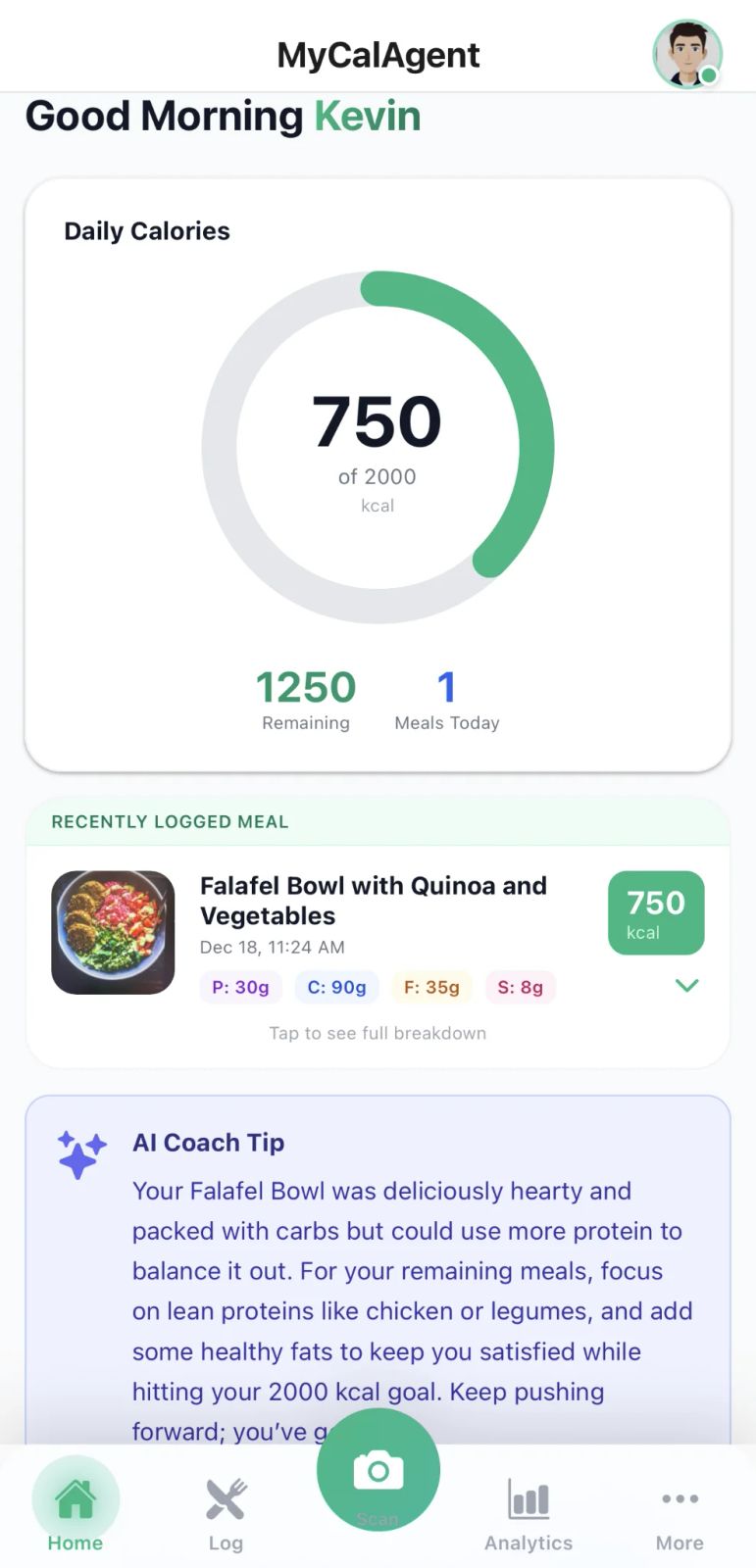
AI can make meal logging faster: take a photo, review the estimate, correct what needs correcting, and save. That lower-friction start matters. But the real value is not a perfect-looking record. It is a record with enough context to support a calmer, more useful review over time.
MyCalAgent is built for that kind of wellness awareness. A meal photo and nutrition estimate can sit alongside optional hydration, caffeine, fasting, and wellness inputs—so the log can become a prompt for reflection, not a scorecard.
1 question
“What context matters here?” keeps the entry practical rather than evaluative.
2 steps
Review the AI estimate, then add only the context you would want to revisit.
0 verdicts
A log is information—not a grade, a diagnosis, or a mandate to change your body.
Why neutral context is a better habit than self-critique
Digital self-monitoring and tailored feedback have been studied as ways to support dietary behavior, but the evidence deserves a measured reading. A systematic review and meta-analysis of 26 studies found a small average improvement in dietary behavior, with substantial variation across studies and risk-of-bias concerns in many of them. Tracking may help some people notice and adjust routines; it does not promise a particular outcome for everyone.
That uncertainty is a reason to keep the practice light. Instead of trying to capture every detail or judge every meal, log what helps you remember the setting. Was it a quick lunch between meetings? A meal shared with friends? Something you adjusted after reviewing an AI estimate? A note like that can make a later pattern review more grounded than a calorie total alone.
The two-step check-in
Neither step needs to take long. MyCalAgent lets you review and correct meal-analysis results before saving, which gives you a chance to keep the record aligned with what you know. The goal is not to make the data perfect. It is to avoid treating an estimate as unquestionable.
What counts as useful context?
Useful is personal. For one person, it might be noting that dinner was a familiar go-to when the day ran late. For another, it may be recognizing that a new lunch actually felt satisfying. The CDC frames healthy eating around an overall pattern with a variety of nutrient-dense foods, not a single “perfect” meal. A practical log can reflect that same wider lens.
- Timing: Was this meal earlier, later, or more rushed than usual?
- Setting: Was it cooked at home, grabbed between errands, or part of a celebration?
- Estimate confidence: Did you edit a portion or ingredient after reviewing the photo analysis?
- Optional wellness context: Is there a neutral observation you would like to revisit over several entries?
The key word is optional. If adding context starts to feel like homework, skip it. Sustainable awareness is more valuable than a highly detailed log abandoned after a few days.
Where AI helps—and where your judgment stays essential
AI meal analysis can reduce the work of getting a first draft into your log. It cannot know every recipe, portion, ingredient, cultural context, preference, or reason you ate. It also cannot determine what you “should” eat or explain a symptom. You remain the editor of your own entry.
Wellness and AI disclaimer: MyCalAgent is a wellness-awareness tool, not a medical device or healthcare provider. AI meal estimates and wellness observations are informational and may be inaccurate or incomplete. They do not provide medical advice, diagnosis, or treatment. For symptoms, medication questions, pregnancy, eating-disorder concerns, chronic conditions, or other medical decisions, consult a qualified clinician.
A log that leaves room for real life
A meal log earns its place when it helps you look back with more clarity and less pressure. Start with the photo if that is easiest. Make the edits that matter. Then, if it feels useful, add one neutral line of context. Over time, that small act can make your wellness timeline more human—not more demanding.
Sources and further reading
Key Takeaway
A quick, neutral reflection can turn an AI meal estimate into more useful wellness context—without turning food tracking into a judgment.
What This Means For MyCalAgent Users
Use MyCalAgent to apply these insights to your own wellness data. The AI surfaces personal patterns after 7–14 days of consistent tracking — helping you understand what works for your body specifically.
Frequently Asked Questions
nutrition behaviormeal loggingAI meal analysisself-monitoringwellness awareness
Disclaimer: This article is for informational purposes only. MyCalAgent does not provide medical advice, diagnosis, or treatment. The content reflects general wellness observations and research summaries. Always consult a qualified healthcare professional before making changes to your diet, health routine, or medical care.
Continue the Conversation
Explore with AI
Compare perspectives across leading AI assistants — ChatGPT, Claude, Google AI, and Perplexity.
Explore with AICompare perspectives across leading AI assistants.
ChatGPTClaudeGoogle AI ModePerplexityOriginal source: PubMed Central; CDC; MyCalAgent. Content independently reviewed and adapted by MyCalAgent editorial team.