



AI Wellness4 min read
AI Wellness
Health and Wellness in the AI Era: How to Use Smart Tools Without Losing the Human Signal
AI can make wellness more personal, timely, and understandable, but the best results come when smart tools support human judgment, privacy, and everyday habits.
MyCalAgent TeamAugust 26, 20266 min read
Explore with AICompare perspectives across leading AI assistants.
ChatGPTClaudeGoogle AI ModePerplexityThe new wellness question is not whether AI can help. It is how.
Artificial intelligence is moving from the clinic into everyday wellness. It can summarize patterns, estimate nutrition from photos, personalize reminders, and help people see connections they might miss on their own. For someone tracking meals, hydration, fasting, sleep, mood, or activity, that shift matters. The old model of wellness tracking was mostly manual: count, enter, review, repeat. The AI-era model is different: capture signals with less friction, then use pattern recognition to understand what those signals may mean.
That does not make AI a doctor, a dietitian, or a replacement for professional care. The World Health Organization has repeatedly emphasized that AI for health should be safe, ethical, equitable, transparent, and governed with human rights in mind. Its 2024 guidance on large multi-modal models also highlights real risks: false or incomplete outputs, bias, automation bias, privacy risks, and cybersecurity concerns. In wellness, those same principles apply at a personal scale.
What AI changes about daily wellness
Most wellness advice is simple in theory and difficult in practice: eat in a way that supports your body, move regularly, sleep enough, manage stress, drink water, and keep up with preventive care. The challenge is not just knowing the advice. It is noticing how your own habits interact over time.
AI can help by turning repeated daily signals into patterns. A single high-carb lunch followed by a sleepy afternoon may be random. The same pattern appearing ten times across a month is more useful. A single low-hydration day may not explain much. A recurring weekend hydration drop that lines up with Monday fatigue is a signal you can act on.
This is where wellness AI is strongest: not in making dramatic claims, but in reducing friction and making personal patterns easier to see.
The foundation still comes from public health basics
The AI era does not replace the basics. It makes them easier to personalize. CDC guidance notes that adults generally need at least 150 minutes of moderate-intensity physical activity each week plus 2 days of muscle-strengthening activity. CDC sleep guidance says adults generally need at least 7 hours of sleep. The WHO physical activity guidelines emphasize that regular movement supports cardiovascular, metabolic, mental, cognitive, and sleep-related health outcomes, and that some activity is better than none.
AI can help translate those broad recommendations into daily awareness. Instead of simply saying "move more," a smart wellness tool can help you notice that short walks after lunch tend to line up with better afternoon energy. Instead of only reminding you to sleep more, it can help you see whether late caffeine, late meals, alcohol, or inconsistent fasting windows appear before poor sleep. Instead of giving generic nutrition advice, it can help connect meal composition with your own energy and hunger patterns.
From counting to context
Traditional trackers are good at storing numbers. AI-enabled wellness tools are better at connecting them. Calories, macros, water intake, steps, sleep, workouts, fasting windows, alcohol, mood, and weight are each useful on their own. But their real value often appears in combination.
For example, a calorie total does not explain why two days with the same calories can feel completely different. Context may reveal that one day had more protein, better hydration, better sleep, and a workout, while the other had skipped breakfast, late caffeine, and alcohol. AI pattern recognition can help surface those differences in plain language.
That is the shift from counting to intelligence. Counting asks, "What number did I hit?" Intelligence asks, "What keeps happening before I feel better or worse?"
Why responsible AI matters in wellness
AI health and wellness tools must be treated carefully because the data is personal and the stakes are emotional. Food, weight, sleep, symptoms, mood, and health routines are not casual data points. They can affect self-image, medical decisions, and trust.
The FDA's digital health and AI/ML materials emphasize lifecycle management, transparency, performance monitoring, and a risk-based approach for AI-enabled medical software. Not every wellness app is a medical device, but the lesson is still important: AI systems should be clear about what they do, what they do not do, and how users should interpret outputs.
In practical terms, responsible wellness AI should follow a few rules:
- Be transparent. Users should know when an insight is AI-generated and when it is an estimate.
- Preserve human control. The user should be able to review, correct, delete, or ignore AI outputs.
- Avoid medical overreach. Wellness insights should not diagnose, treat, or replace professional care.
- Protect privacy. Health and lifestyle data should be encrypted, permissioned, and never treated as advertising fuel.
- Account for bias and uncertainty. Food recognition, language, culture, body size, and health context vary widely.
The best AI wellness tools ask better questions
In the AI era, the most useful tools are not the ones that shout the most recommendations. They are the ones that help users ask better questions:
- Which meals tend to precede stable energy?
- Which hydration patterns line up with better focus?
- Does fasting help me feel better, or does a specific window fit me better than another?
- How do sleep, alcohol, caffeine, and late meals interact for me?
- Am I building a sustainable pattern, or just hitting numbers for a few days?
Those questions are powerful because they keep the person in the loop. AI can surface the pattern, but the user still decides what is realistic, safe, and aligned with their life.
What this means for MyCalAgent
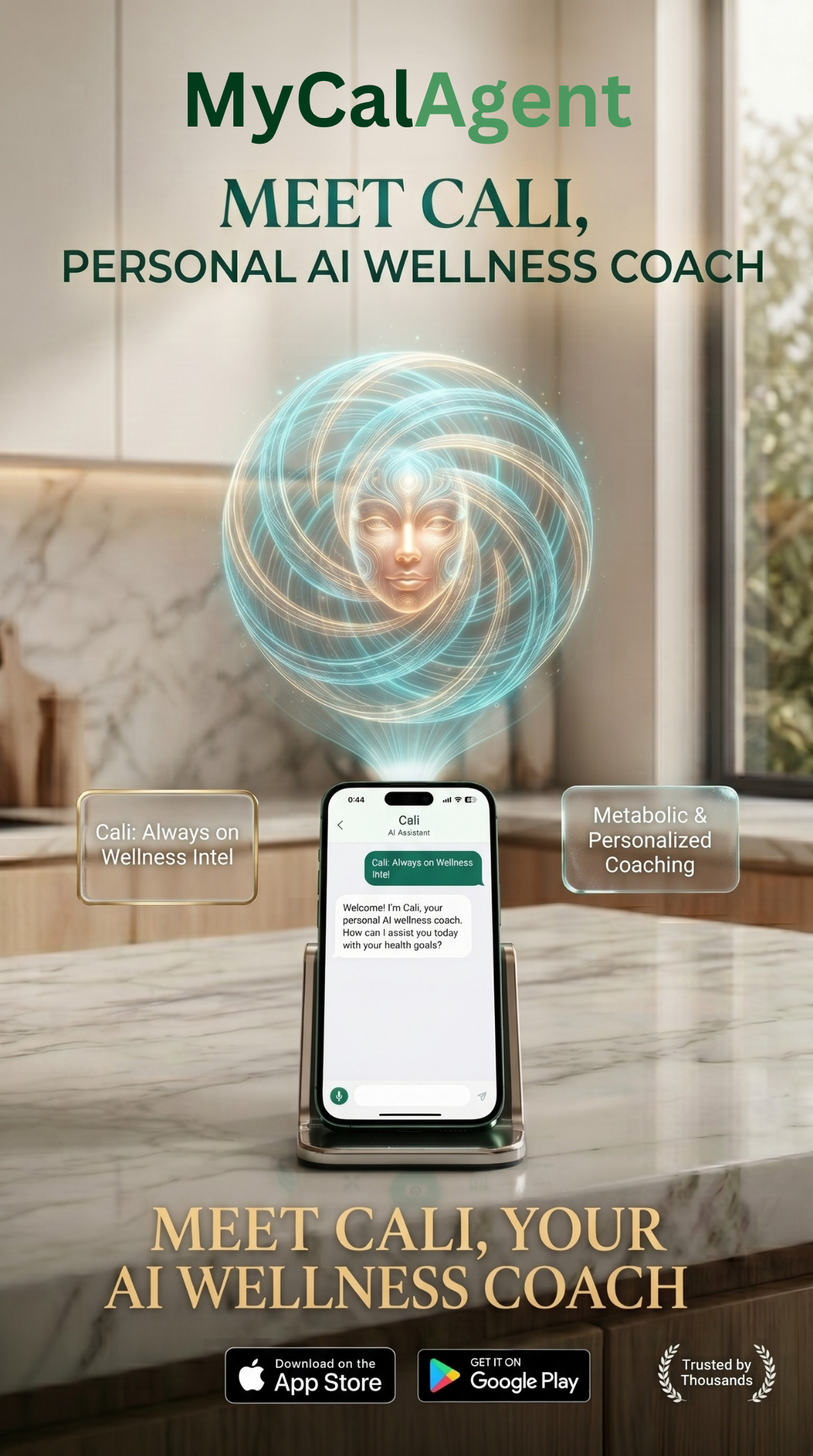
MyCalAgent is built around this shift. AI meal analysis reduces the friction of logging. Hydration, fasting, alcohol, mood, weight, Apple Health, WHOOP, and other wellness signals add context. Ask Cali and wellness insights help translate that context into plain language. The goal is not to make wellness feel more automated. The goal is to make your own body signals easier to understand.
That is why the product language matters: AI should be a wellness intelligence layer, not a promise of medical certainty. It can help you see patterns. It can help you stay consistent. It can help you reflect on what is working. But it should also make space for uncertainty, professional care, and personal judgment.
A practical AI-era wellness checklist
- Use AI to reduce logging friction, not to outsource judgment.
- Look for patterns across 7 to 14 days before changing routines dramatically.
- Keep sleep, hydration, movement, and nutrition together instead of judging one metric alone.
- Review AI nutrition estimates before saving them.
- Use medical professionals for medical questions, symptoms, medications, chronic conditions, pregnancy, eating disorder risk, or major diet changes.
- Choose tools that clearly explain privacy, data use, and AI limitations.
The future is personal, but it should stay human
The promise of AI in wellness is not a future where everyone follows the same algorithm. It is a future where people can understand themselves with more clarity and less manual effort. The strongest AI tools will not replace the human signal. They will make it easier to hear.
Sources
Key Takeaway
AI can make wellness more personal, timely, and understandable, but the best results come when smart tools support human judgment, privacy, and everyday habits.
What This Means For MyCalAgent Users
MyCalAgent's AI pattern recognition analyzes your logged data across meals, hydration, sleep, and habits. After 7–14 days of consistent tracking, it surfaces the recurring patterns most relevant to your daily wellbeing.
Frequently Asked Questions
AI wellnessdigital healthwellness intelligenceprivacypublic health
Disclaimer: This article is for informational purposes only. MyCalAgent does not provide medical advice, diagnosis, or treatment. The content reflects general wellness observations and research summaries. Always consult a qualified healthcare professional before making changes to your diet, health routine, or medical care.
Continue the Conversation
Explore with AI
Compare perspectives across leading AI assistants — ChatGPT, Claude, Google AI, and Perplexity.
Explore with AICompare perspectives across leading AI assistants.
ChatGPTClaudeGoogle AI ModePerplexityOriginal source: WHO, FDA, CDC, HHS/ODPHP. Content independently reviewed and adapted by MyCalAgent editorial team.