



AI Wellness4 min read
AI Wellness
Why AI Meal Analysis Works Best When It Lowers Logging Friction
AI meal analysis is most useful when it reduces the friction of self-monitoring, keeps the human in the loop, and turns meal photos into context you can actually use.
MyCalAgent TeamAugust 31, 20264 min read
Explore with AICompare perspectives across leading AI assistants.
ChatGPTClaudeGoogle AI ModePerplexityManual logging fails for a simple reason: it asks one small habit to do too much work.
Food logging becomes fragile the moment it starts feeling like paperwork. A good system asks you to remember ingredients, estimate portions, look up nutrition values, and keep doing that every day. A better system reduces the first burst of friction so you can capture the meal first and review the estimate second. That matters because self-monitoring keeps showing up in behavior-change research as a useful lever, but only when people can sustain the habit long enough to learn from it.
Photo-first logging does not make nutrition math perfect. It makes logging more likely. That is a better trade for real life.
80%+
Photo logging satisfaction
In one phone-based photo record study, participant satisfaction was above 80%.
97.5%
Compliance in one study
A smartphone photographic food record study reported a 97.5% compliance rate.
59
Studies reviewed
A 2021 systematic review examined 59 dietary self-monitoring intervention studies.
Those numbers do not prove perfection. They point to the same practical lesson: when logging gets easier, people are more likely to keep logging. That is the part AI can improve without making wild claims.
What AI meal analysis can do well
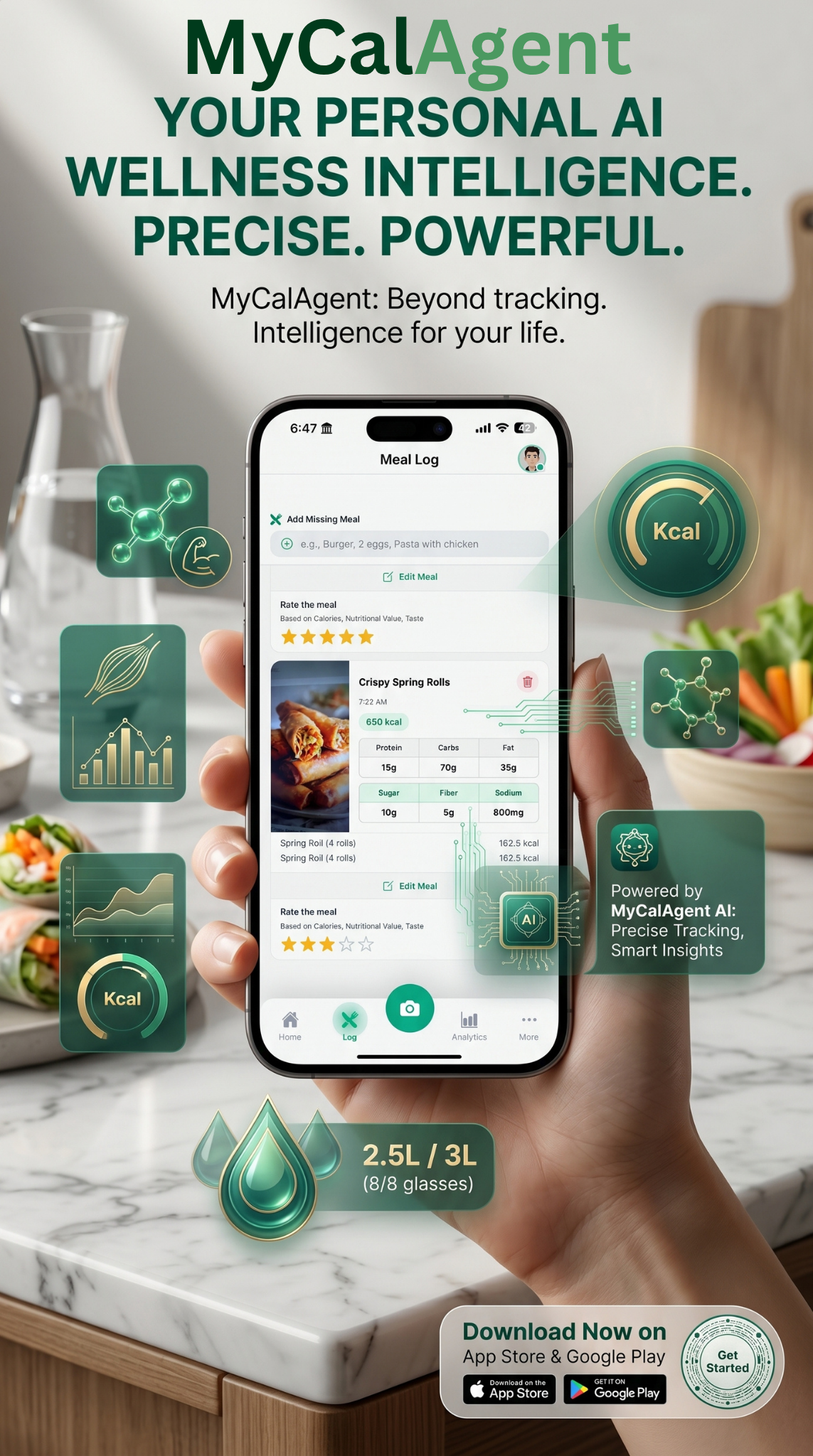
The best use of AI meal analysis is not to declare a meal solved. It is to give you enough context quickly enough that you stay engaged. In MyCalAgent, that means a meal photo can become a useful starting point instead of a blank page.
| Step | Manual logging | AI meal analysis |
|---|---|---|
| Capture | Search, type, and remember details from memory | Take a photo first and reduce the first point of friction |
| Context | Usually only the food itself | Food, portion estimate, and a log that can connect to energy, hydration, or fasting |
| Review | Manual by default | Review, correct, and save the estimate with human judgment intact |
| Best use | Precise entries when you have time | Everyday meals, mixed plates, and the moments when consistency matters more than perfection |
What it cannot do reliably
AI meal analysis is an estimate, not a verdict. It can misread sauces, hidden oils, cooking methods, and portion sizes. It can be less reliable when the image is dark, crowded, or visually ambiguous. Research on photo-based dietary records shows the method is feasible and user-friendly, but it also notes systematic bias at higher intake levels. A 2024 analysis of nutrition apps found that AI-enabled food-image recognition can be useful, yet accuracy still varies by diet pattern and app design.
- It cannot see every ingredient with certainty.
- It cannot know the exact gram weight of a dish from a photo alone.
- It cannot decide whether a meal is good or bad for you.
- It should not replace clinician-guided nutrition care.
How MyCalAgent uses that constraint well
MyCalAgent is designed to make the estimate useful without pretending it is clinical truth. The app pairs AI meal analysis with human review, dietary conflict detection, allergen awareness, hydration tracking, fasting context, mood, and wellness pattern recognition. That combination matters because one meal rarely tells the full story. A pattern across a week often does.
That is also why the product language stays careful. The goal is wellness awareness, not diagnosis. Context is the product, and the estimate is only one part of it.
1. Capture
Take the photo while the meal is in front of you, before memory starts to fade.
2. Review
Check the estimate, fix obvious misses, and keep your own judgment in the loop.
3. Compare
Look for patterns over 7 to 14 days instead of overreacting to one imperfect scan.
That is the real value of AI meal analysis: not a perfect answer in the moment, but a lower-friction path to more consistent self-awareness over time.
Wellness and AI disclaimer: This article is educational and not medical advice. MyCalAgent uses AI to estimate nutrition and surface patterns for informational purposes only. It does not diagnose, treat, cure, or replace professional care. If you are pregnant, have diabetes, take medications that affect appetite or glucose, manage a chronic condition, or have a history of disordered eating, consult a qualified healthcare professional before relying on any food logging tool.
Sources
- PubMed: Evaluating the Quality and Comparative Validity of Manual Food Logging and Artificial Intelligence-Enabled Food Image Recognition in Apps for Nutrition Care
- PubMed: Digital self-monitoring of diet and physical activity meta-analysis
- PubMed: A systematic review of dietary self-monitoring in behavioural weight loss interventions
- PubMed: Feasibility and relative validity of a digital photo-based dietary assessment
- PubMed: Validity and practicability of smartphone-based photographic food records
- WHO: Ethics and governance of artificial intelligence for health
- FDA: Artificial intelligence in software as a medical device
- MyCalAgent: AI Meal Analysis
- MyCalAgent: AI Disclaimer
Key Takeaway
AI meal analysis is most useful when it reduces the friction of self-monitoring, keeps the human in the loop, and turns meal photos into context you can actually use.
What This Means For MyCalAgent Users
MyCalAgent's AI pattern recognition analyzes your logged data across meals, hydration, sleep, and habits. After 7–14 days of consistent tracking, it surfaces the recurring patterns most relevant to your daily wellbeing.
Frequently Asked Questions
AI meal analysisfood loggingself-monitoringnutrition trackingwellness intelligence
Disclaimer: This article is for informational purposes only. MyCalAgent does not provide medical advice, diagnosis, or treatment. The content reflects general wellness observations and research summaries. Always consult a qualified healthcare professional before making changes to your diet, health routine, or medical care.
Continue the Conversation
Explore with AI
Compare perspectives across leading AI assistants — ChatGPT, Claude, Google AI, and Perplexity.
Explore with AICompare perspectives across leading AI assistants.
ChatGPTClaudeGoogle AI ModePerplexityOriginal source: PubMed, WHO, FDA, MyCalAgent. Content independently reviewed and adapted by MyCalAgent editorial team.