



Nutrition & Lifestyle5 min read
Food & Mood
A Useful Food Log Has an Exit Ramp
Food logging does not need to become a food grade. A lower-pressure, AI-aware way to use a partial nutrition record with context and care.
MyCalAgent TeamNovember 20, 20264 min readLast Updated: November 20, 2026
Explore with AICompare perspectives across leading AI assistants.
ChatGPTClaudeGoogle AI ModePerplexityA wellness record should create room, not take it.
Food logging can be useful when it helps you remember, notice, or plan. It stops being useful when every unlogged bite starts to feel like a missing piece of evidence.
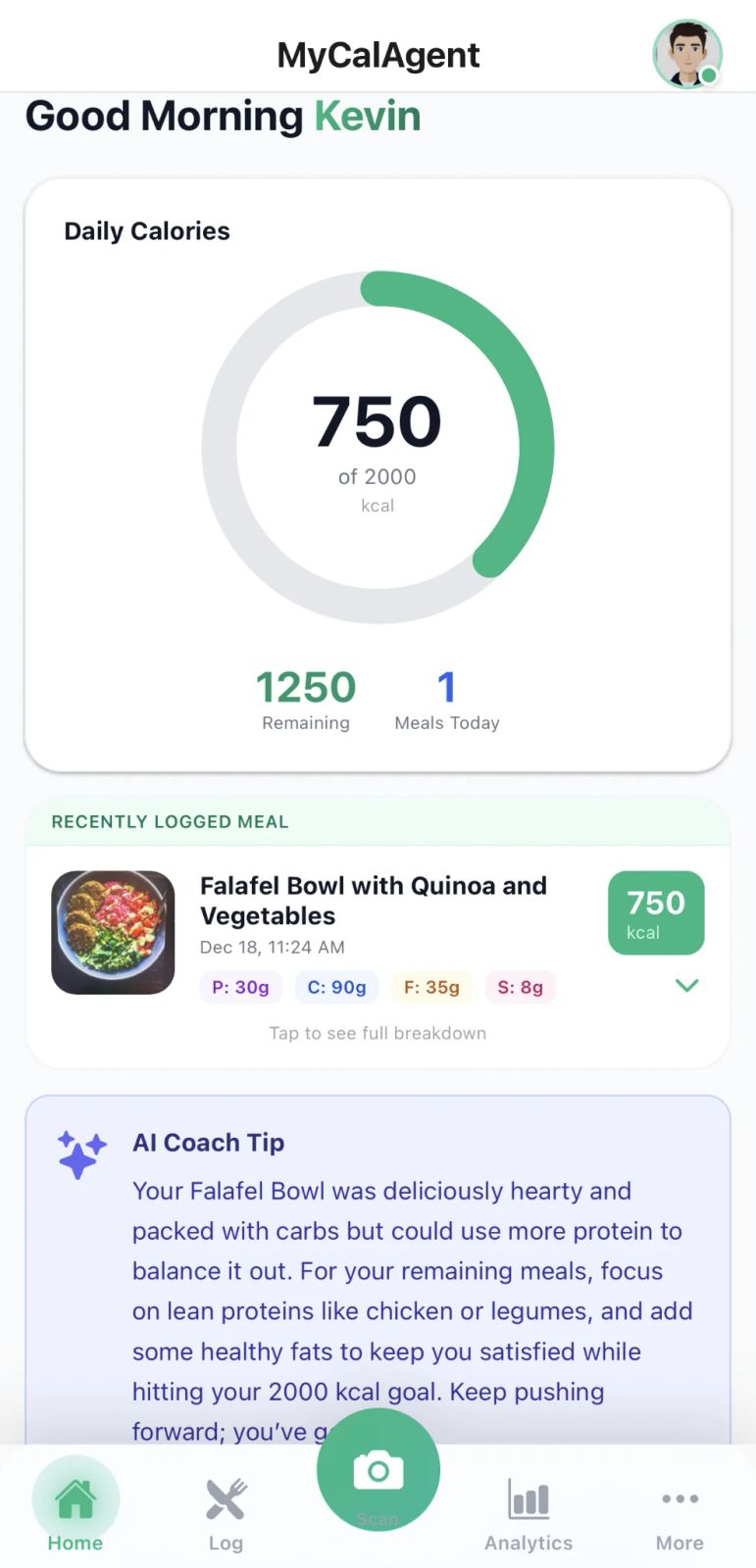
That distinction is worth protecting in the AI era. A fast photo estimate, a barcode scan, or an automatically organized record can lower the effort of tracking—but lower effort should not become an expectation of total surveillance. MyCalAgent is built for wellness awareness, not perfect compliance. What you choose to log is a personal record with natural gaps, changing routines, and room for real life.
Notice
Capture a meal or moment when it helps you remember.
Add context
A photo or estimate can be edited when details matter.
Step away
A missed entry is not a verdict on the day.
Healthy eating is a pattern, not a flawless feed
The World Health Organization describes healthy diets through adequacy, balance, moderation, and diversity—and notes that the exact shape of a healthy diet varies with lifestyle, culture, local food availability, and individual circumstances. That is a useful counterweight to the idea that a single meal, macro target, or app streak can sum up how someone is doing.
A record can support curiosity about a pattern: “Which lunches keep me satisfied through an afternoon meeting?” “What do I usually reach for on travel days?” “When does meal planning feel easiest?” Those are different questions from “Was this entry good?” They leave room for family food, celebrations, convenience, appetite changes, budget, culture, and the ordinary unpredictability of a week.
| When logging feels like… | Try reframing it as… | A calmer next question |
|---|---|---|
| A test of accuracy | A rough memory aid | “What detail would be useful to remember?” |
| A score for the day | One view of a broader routine | “What was happening around this meal?” |
| A reason to compensate | A prompt to return to normal meals and routines | “What would support me next?” |
The evidence has a practical limit: burden matters
Research on dietary self-monitoring has often taken place inside structured weight-management programs, so it cannot tell every person how much logging is right for general wellness. But it does offer one relevant caution: in a systematic review of 59 interventions, the authors noted that self-monitoring can wane over time and that abbreviated approaches may reduce participant burden; they also called for better comparisons of logging intensity. In other words, more data is not automatically more helpful.
That is a design lesson as much as a behavior lesson. A tool earns a place in a routine when it helps someone see something they could use—not when it makes every meal feel like homework. A lighter approach may mean logging a few representative days, using a photo as a starting point, checking a recurring question, or taking a break when the record no longer feels supportive.
Where AI belongs—and where it does not
AI can help turn a partial record into a more navigable one: it can estimate nutrition from what is visible in a meal photo, help organize entries, and surface possible patterns across logged meals and habits. It cannot see preparation details, portions, ingredients, stress, symptoms, medical history, or everything that happened outside the app. A pattern in incomplete data is a question to explore, not proof of a cause.
“Your logged lunches included fewer vegetables on the busiest days.” That may be a useful observation. It is not a diagnosis, a prescription, or a reason to judge the days that were not logged.
The most responsible AI output makes its limits legible: what information it used, what may be missing, and how you can correct it. MyCalAgent’s estimates and observations are meant to support reflection, not replace your judgment or professional care.
A low-pressure way to use a food record
- Choose one purpose. You might be curious about meal timing, variety, hydration alongside meals, or simply remembering what you enjoyed.
- Log the moments that serve that purpose. There is no universal rule that every item must be captured for a wellness record to be meaningful.
- Review in context. Notice routines over time, while treating gaps and exceptions as normal information—not failures.
- Keep an exit ramp. If tracking brings pressure, rigidity, or preoccupation, pause. A registered dietitian or qualified healthcare professional can help with individualized nutrition questions or concerns about your relationship with food.
A useful food log is not an audit of your worth or willpower. It is a flexible tool for noticing a life that is already in motion. The point is not to make every meal legible to an algorithm. The point is to keep the parts that help you care for yourself with more context and less pressure.
Sources and further reading
- World Health Organization: Healthy Diet
- PubMed Central: A Systematic Review of Dietary Self-Monitoring in Behavioural Weight-Loss Interventions
- MyCalAgent: Editorial Policy
- MyCalAgent: AI Disclaimer
Wellness and AI disclaimer: This article is educational and for general wellness awareness only. MyCalAgent is not a medical device and does not provide medical advice, diagnosis, or treatment. AI estimates and observations may be inaccurate or incomplete and do not establish cause and effect. If food tracking feels rigid or distressing, or if you have symptoms, a medical condition, take medications, are pregnant, or have eating-disorder concerns, seek guidance from a qualified healthcare professional or registered dietitian.
Key Takeaway
Food logging does not need to become a food grade. A lower-pressure, AI-aware way to use a partial nutrition record with context and care.
What This Means For MyCalAgent Users
Log your meals with MyCalAgent and connect them to how you feel throughout the day. The AI surfaces correlations between meal composition, timing, and your energy or mood — giving you data-driven insight into your personal food patterns.
Frequently Asked Questions
nutrition behaviorfood loggingAI wellnessmindful trackingwellness technology
Disclaimer: This article is for informational purposes only. MyCalAgent does not provide medical advice, diagnosis, or treatment. The content reflects general wellness observations and research summaries. Always consult a qualified healthcare professional before making changes to your diet, health routine, or medical care.
Continue the Conversation
Explore with AI
Compare perspectives across leading AI assistants — ChatGPT, Claude, Google AI, and Perplexity.
Explore with AICompare perspectives across leading AI assistants.
ChatGPTClaudeGoogle AI ModePerplexityOriginal source: World Health Organization; PubMed Central; MyCalAgent. Content independently reviewed and adapted by MyCalAgent editorial team.